Industry:
Multi-channel retail industry
Company:
Canadian Tire Corporation
Year:
2020-2021
Experience:
Lead Product Designer
Canadian Tire: Filters
about.
Canadian Tire Money has long been one of Canada’s most beloved loyalty currencies. To modernize the experience and attract a younger, digitally minded audience, the company launched Triangle Rewards in 2018, an earn-and-burn program that lets members collect and redeem Canadian Tire Money seamlessly across Canadian Tire and partner stores, both online and in-store.
Earn & Burn programs are one of the most traditional methods of running a loyalty program, where customers earn points for money spent, with the main aim of encouraging repeat purchases to reach new rewards. Today, customers expect more than just points-based or dollar-per-dollar rewards—they want brands to make them feel special and offer exclusive experiences and benefits.
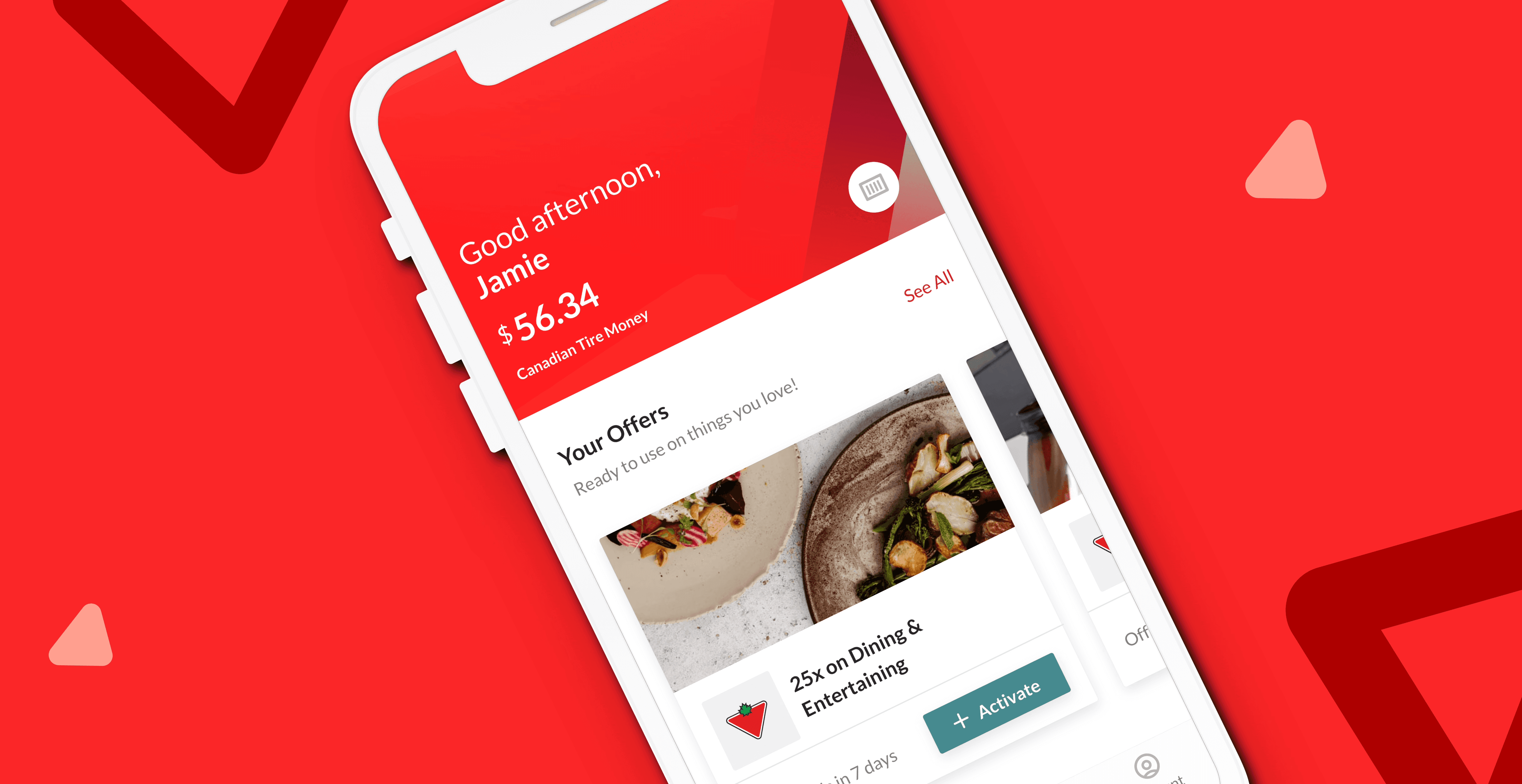
The Triangle App is used by millions of Canadian Tire customers to browse, activate, and redeem personalized rewards. However, the Offers page had become visually dense and difficult to scan, making it hard for users to differentiate Personalized Offers from Weekly Flyer Deals.
other projects.
challenge.
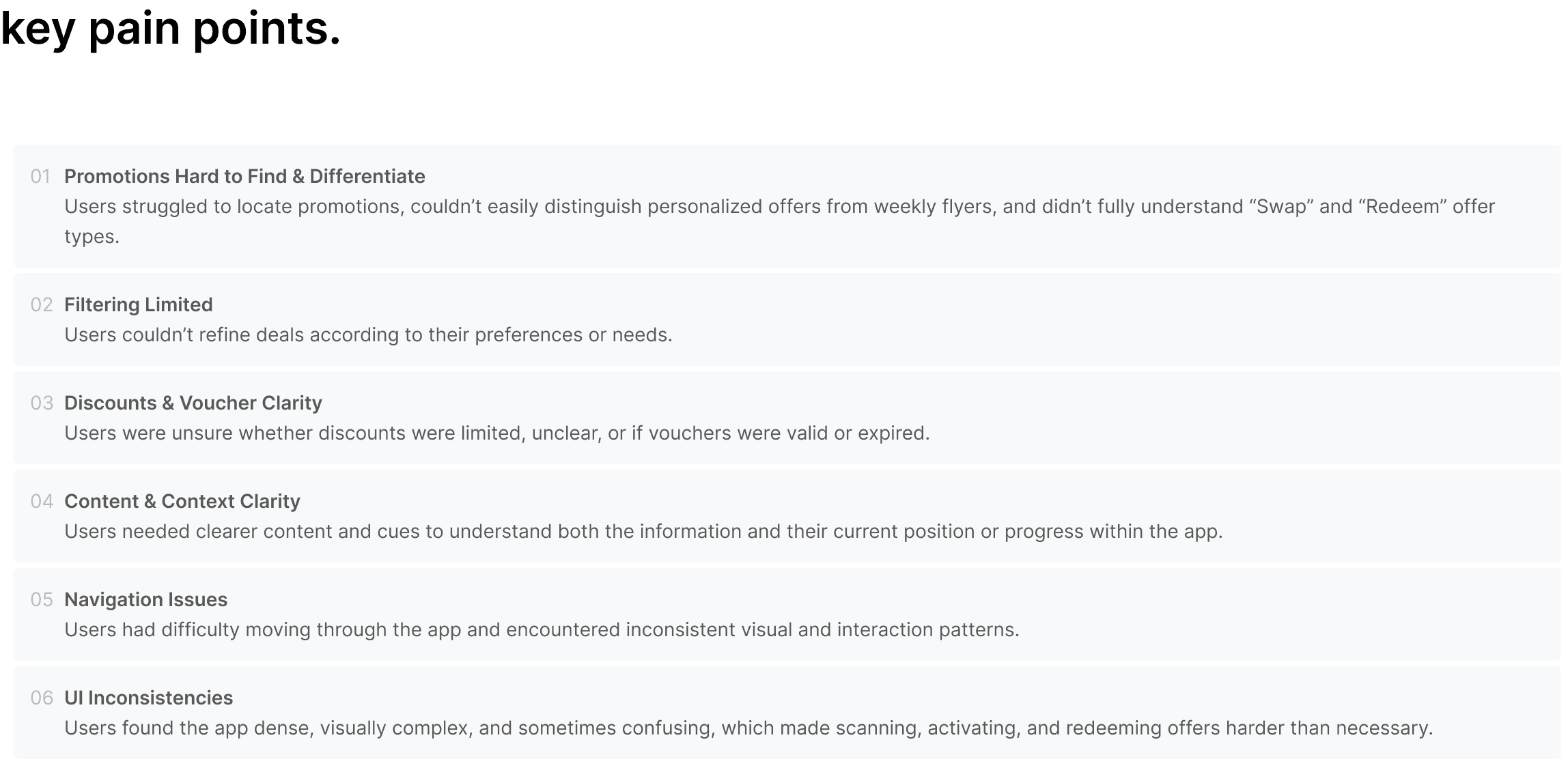
A deeper analysis of the loyalty program revealed that the experience was not performing optimally: users were struggling to understand offer types, how to activate, filter, and redeem the offers most valuable to them and redeem the most valuable deals.
We needed to:
Reduce cognitive load
Improve clarity around offer types and activation states
Ensure filters feel intuitive and quick to use
research.
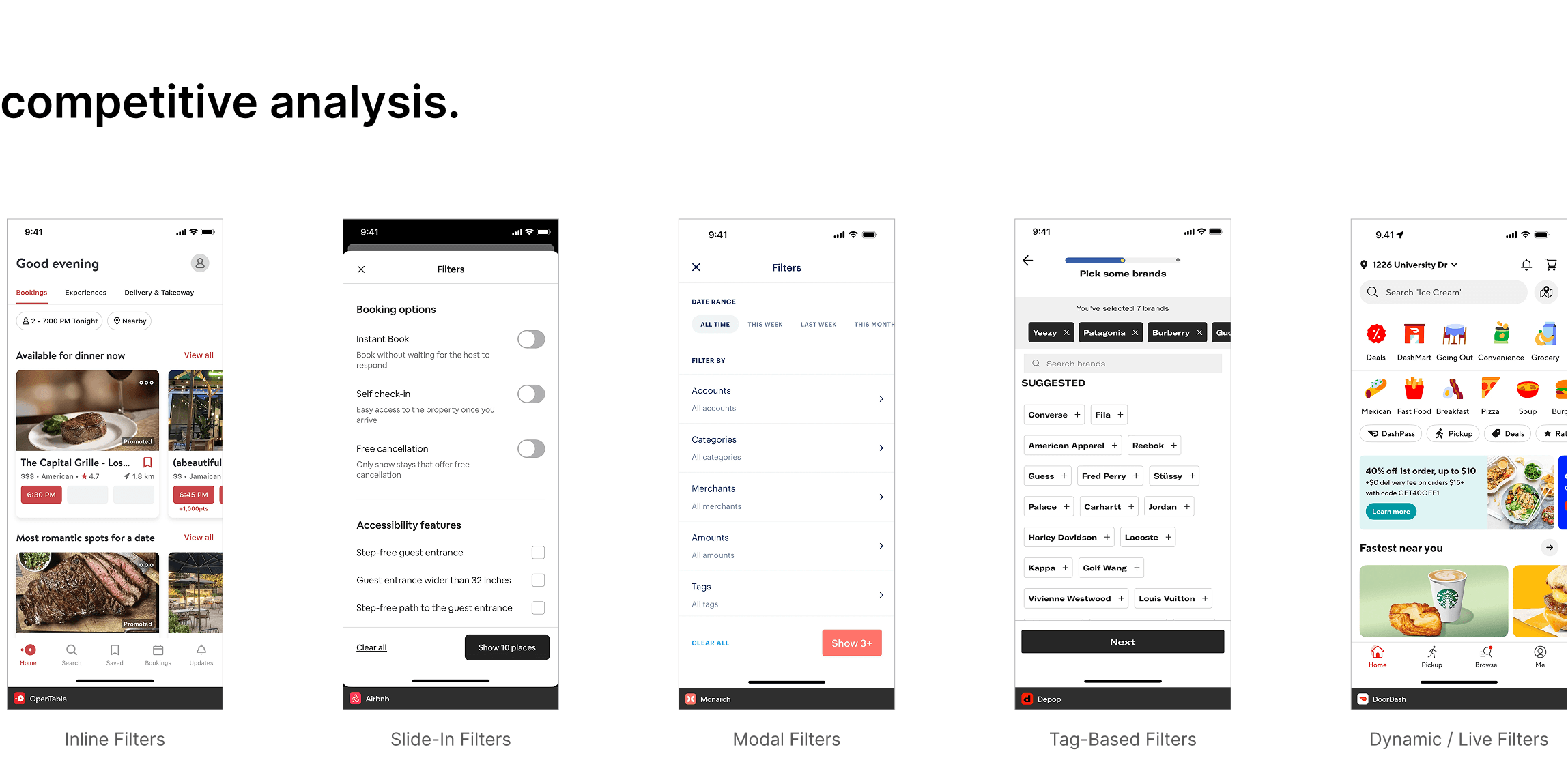
Pattern analysis: I conducted a pattern analysis of filter approaches in loyalty and retail apps to identify best practices, establish a design language, and inform layout, interaction, and visual hierarchy decisions for the Triangle Rewards app
Competitive Analysis: Reviewed how other loyalty apps handle offers and filtering to identify best practices in layout, labeling, and interaction. Explored popular apps to understand how they communicated offer types and improved user engagement.
User Interviews & Prototype Testing: Conducted moderated sessions with 9 active Triangle Rewards members per round. Participants completed tasks such as activating offers, filtering by category, brand, or multiplier, and differentiating Personalized Offers from Weekly Flyer Deals using different layouts and UI treatments to test clarity and usability.
Data Analysis: Analyzed click patterns in the mobile app and website, incorporating insights from the data team to understand user behavior.
Layout Exploration: Tested alternative layouts to explore how users expected to organize and access filters, guiding visual hierarchy and interaction decisions.

exploration 1.
Participants were given a scenario focused on using the filter step-by-step where they were asked to: select Brand (Canadian Tire) → Category → Offer Type (Multiplier) → Sort Offer Type.
This exploration helped us understand how users navigated the existing layout, how quickly they recognized filter options, and whether the baseline structure supported real-world decision making.
The identical visual treatment of weekly flyers and personalized offers caused confusion. Research showed participants couldn’t distinguish the two;
Users struggled to understand whether filters were active or not.
Confusion around filter states (active, inactive, or spent offers)
exploration 2.
In the second exploration, “Activate” was changed to “Shop Now” for flyer-related offers, and Weekly Flyers were placed in a dedicated section at the bottom. This shift improved comprehension: 78% of participants prioritized Personalized Offers, and Weekly Flyers became easier to identify.
exploration 3.
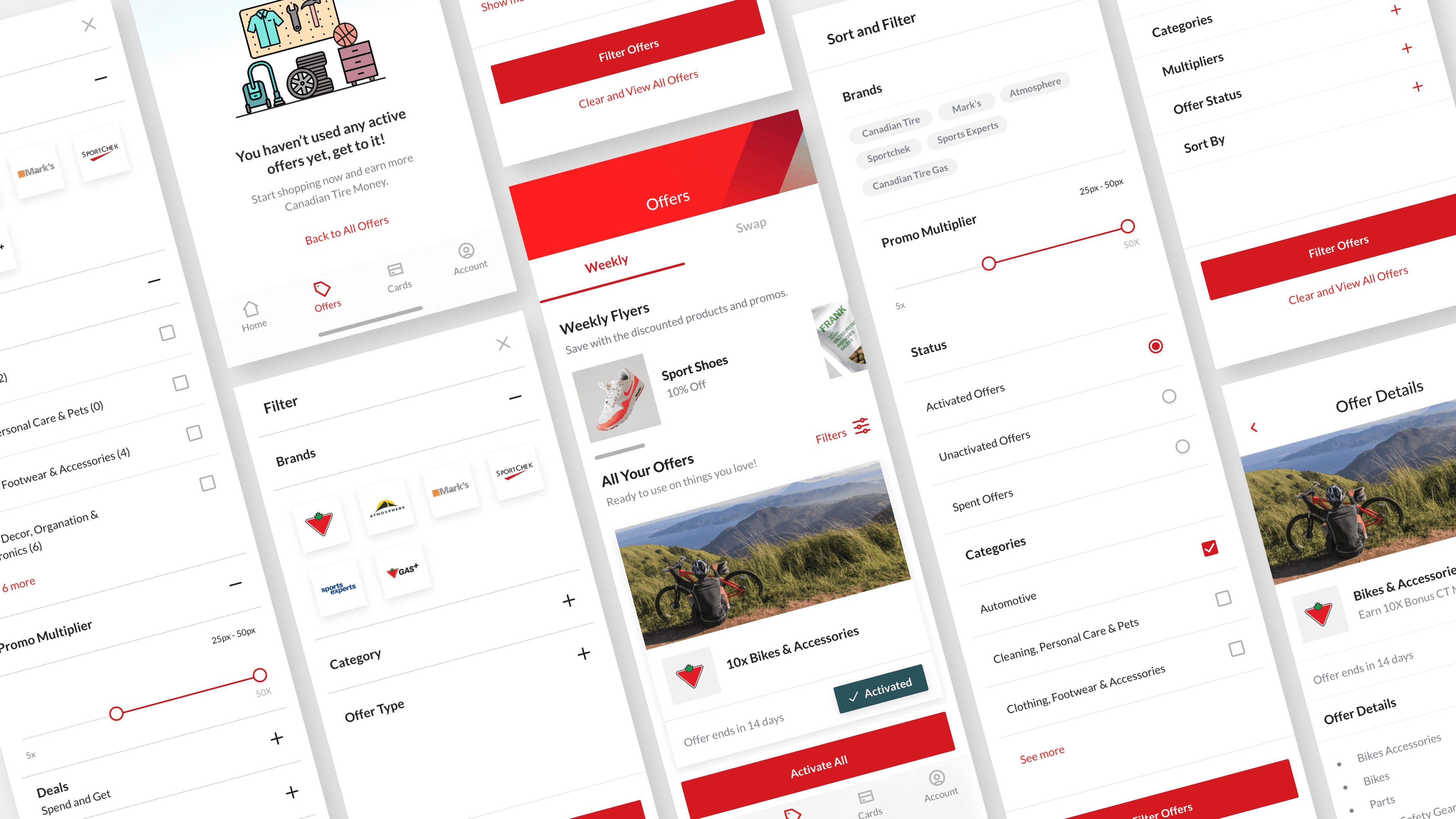
This third iteration placed Weekly Flyers at the top in a smaller horizontal scroll, allowing quick browsing without overpowering Personalized Offers. Filters were reorganized by category, multiplier, and brand, with clearer visual cues. The prototype introduced Activate / Activated states and Shop Now cards for stronger differentiation.
Expired or used offers were removed from view to reduce unnecessary scrolling and cognitive load.
iteration.
I collaborated closely with the user researcher, using insights from competitive analysis, surveys, and moderated testing to refine wireframes, layouts, and visual design. This research-driven approach ensured that the redesign was user-centered, effective, and aligned with business goals. We conducted two rounds of usability testing to compare and validate different exploratory designs of the Offers page against each other.
lessons learned.
Including clear explanations for each step ensured that users understood the entire process and reduced confusion. Designing the account deletion flow reinforced for me the importance of clear communication at every stage. Even a seemingly simple task like deleting an account requires thoughtful design to make users feel informed and respected throughout. I also came to appreciate the balance between security, simplicity, and guiding users without overwhelming them. This process truly highlighted how essential it is to continually examine workflows and look for ways to improve them.