Microsoft: Streak Restore
Company:
Microsoft - Loyalty Program
Year:
2023
Role:
Senior Product Designer
Timeline:
approx. 2 weeks
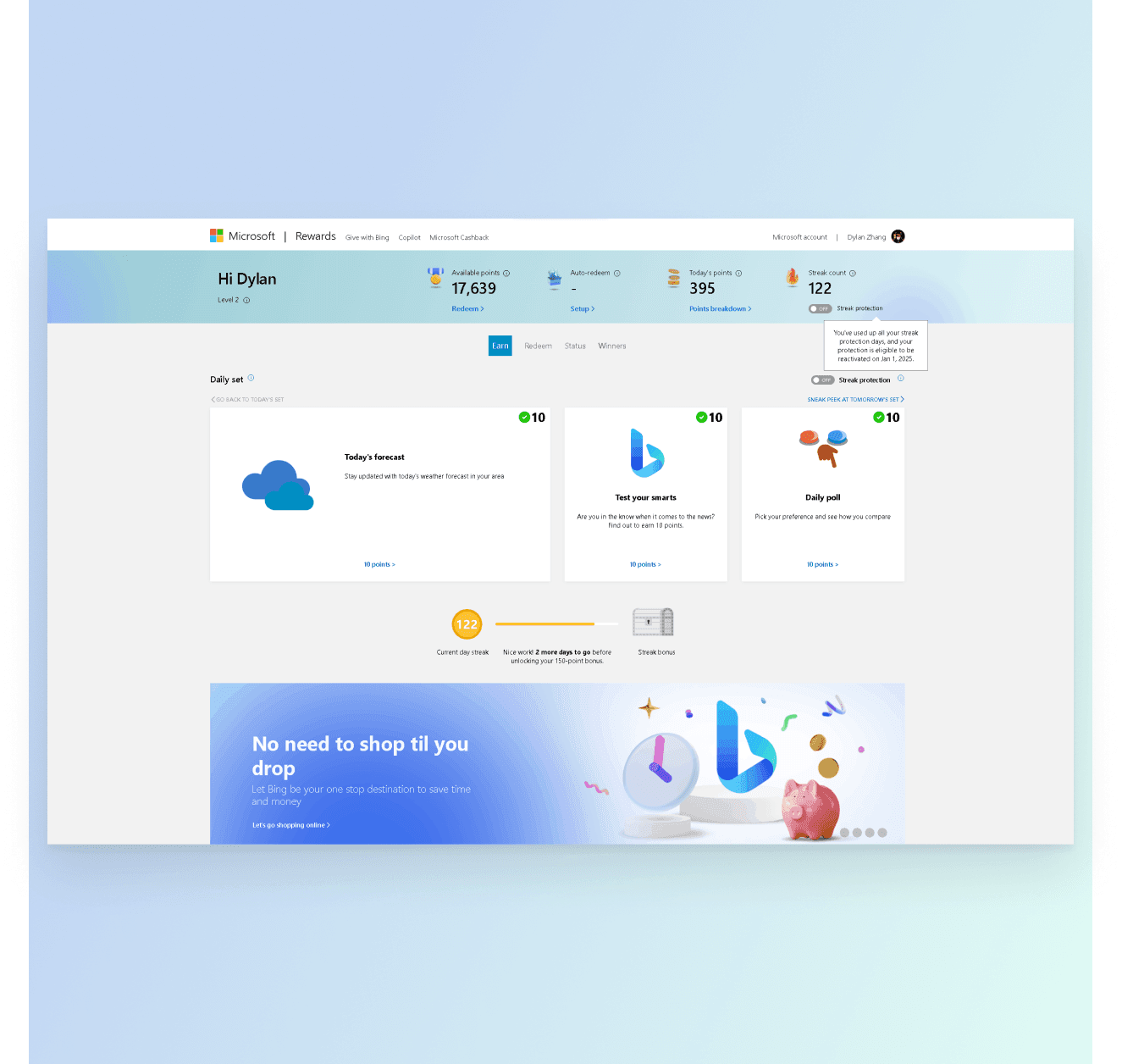
Microsoft Rewards is a loyalty program integrated across the Microsoft ecosystem, including Bing, Edge, Xbox, and the Microsoft Store. Users earn points by completing daily activities such as searches, quizzes, and challenges.
overview.
A core engagement mechanic within the program is the daily streak, which rewards users for returning consistently. As streaks grow, users feel a sense of progress and investment in maintaining their activity.
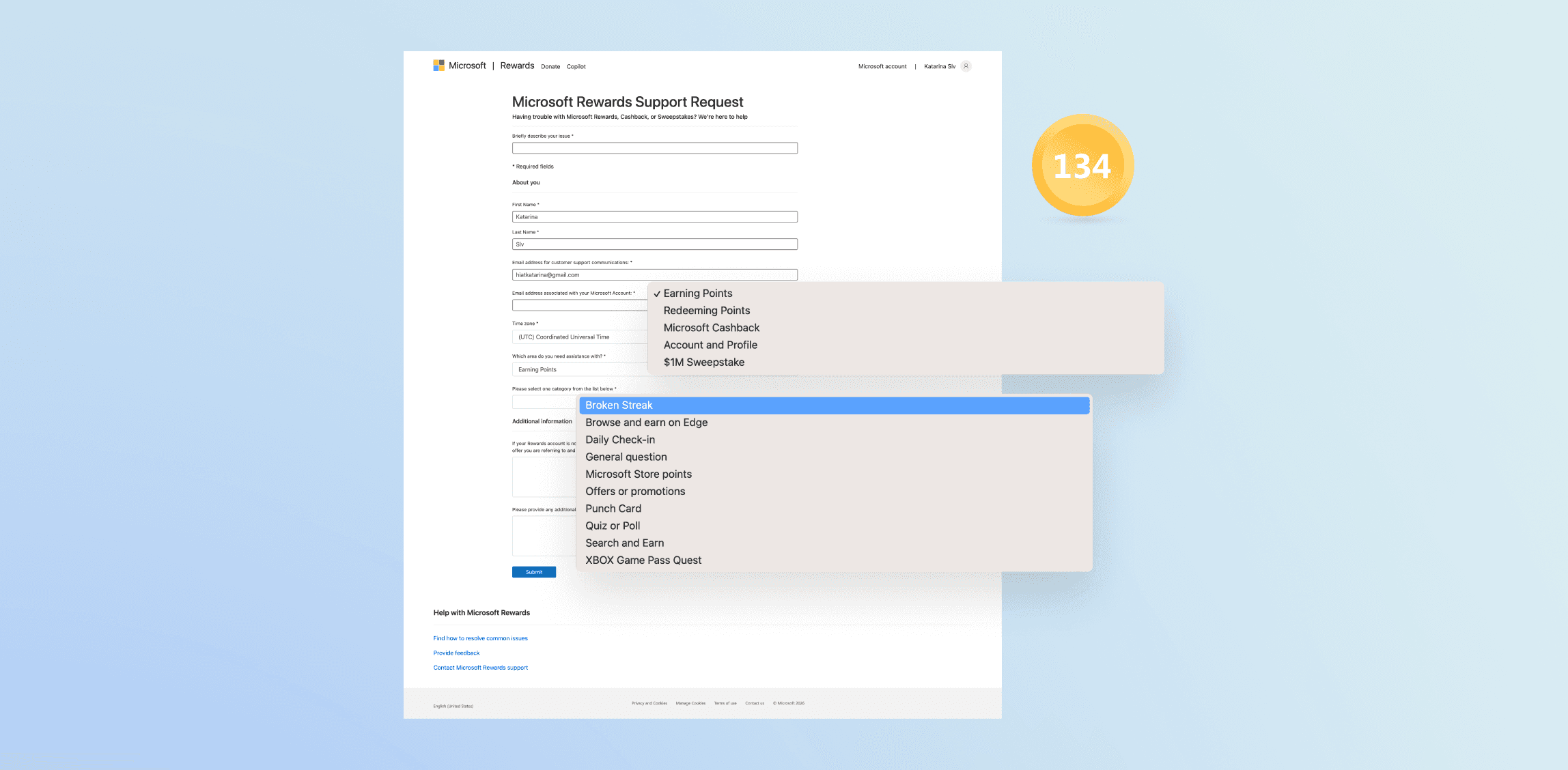
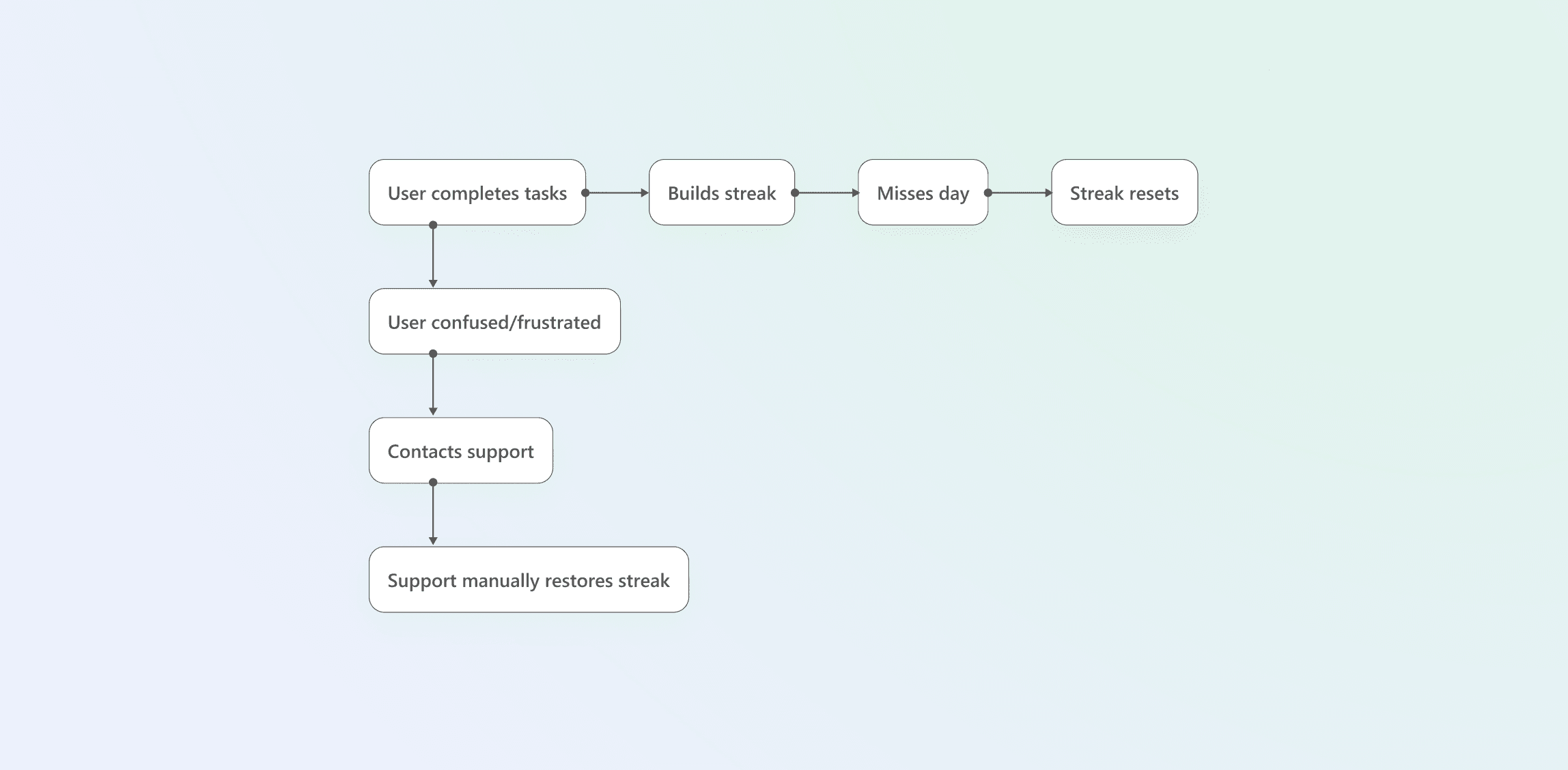
However, when a streak is unintentionally broken due to missed activities, confusion around rules, or system issues, users often experience frustration and contact customer support requesting manual restoration.
This project explored how product design could reduce friction and operational overhead by enabling users to restore their streak through a simple self-service experience.
problem.
user pain point.
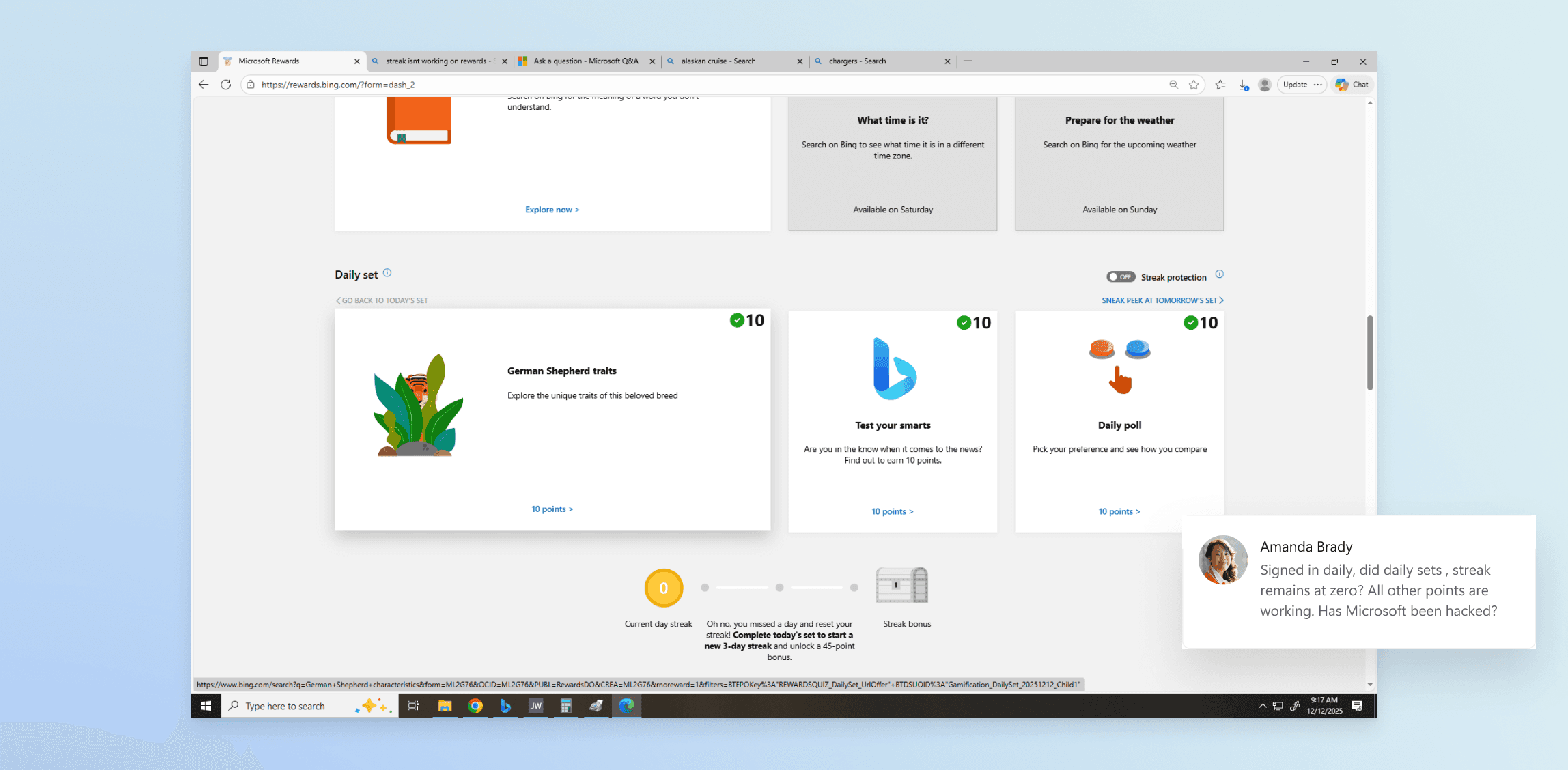
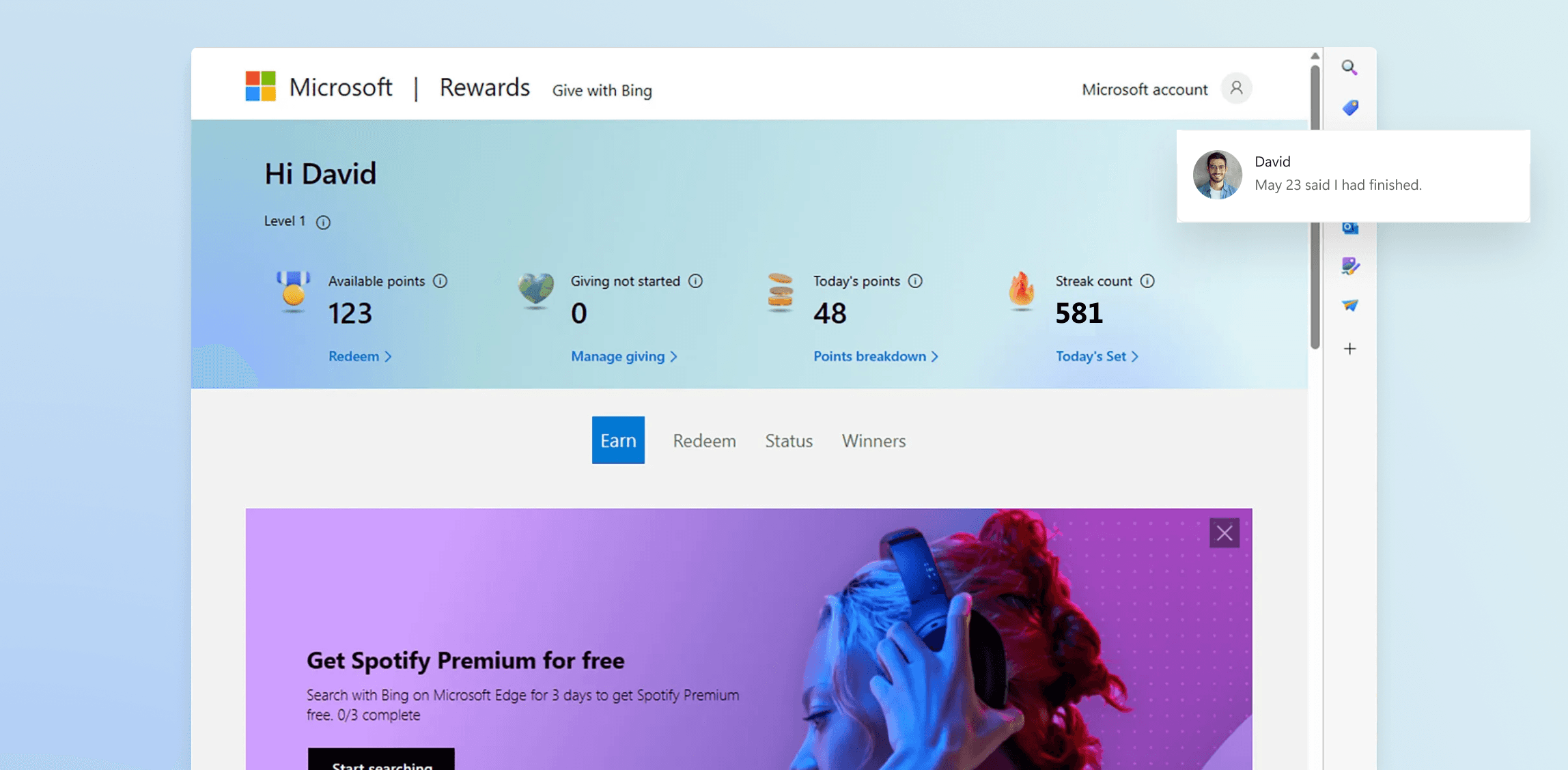
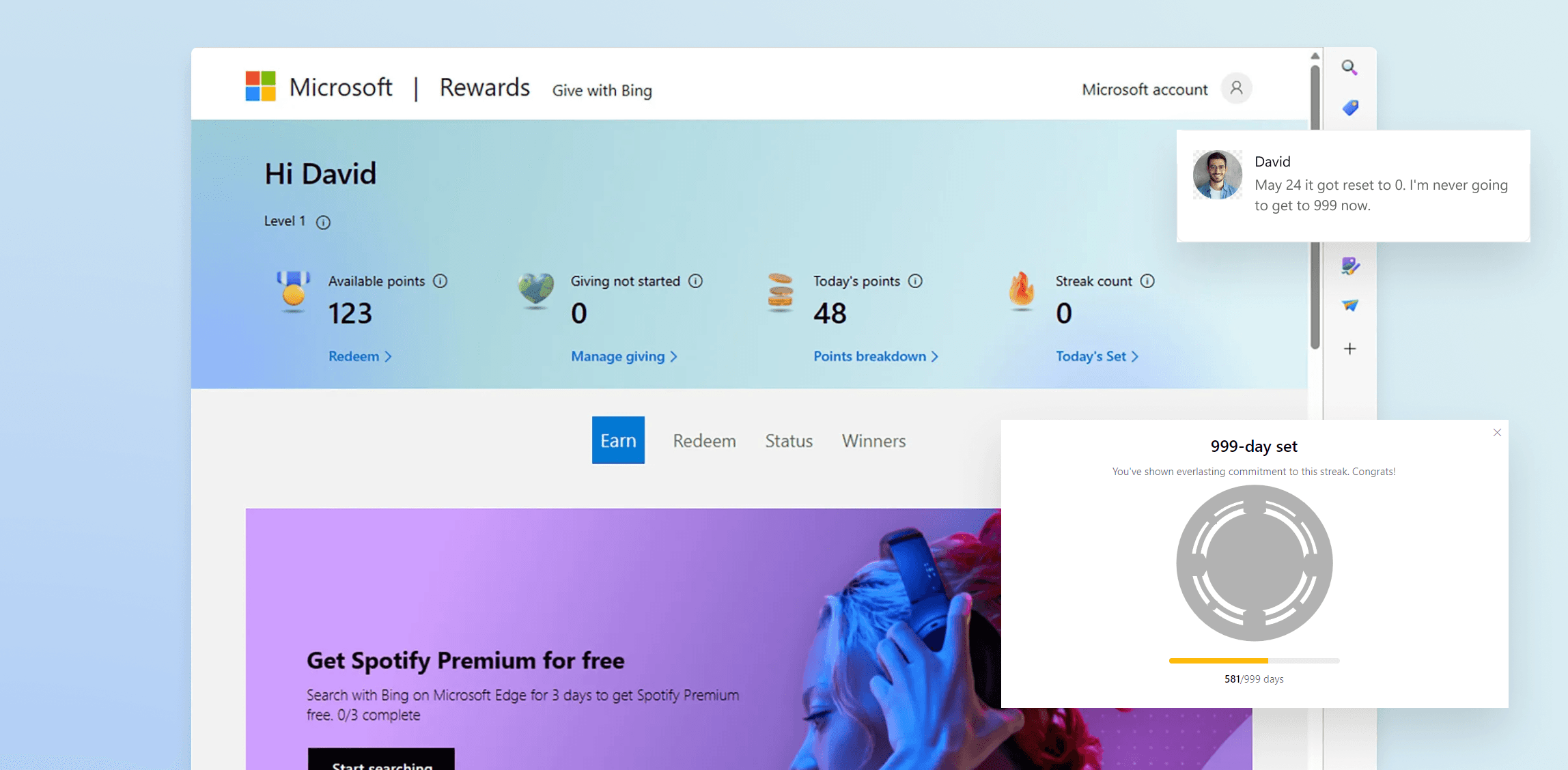
During periods of system instability, users reported losing long streaks despite completing required activities.
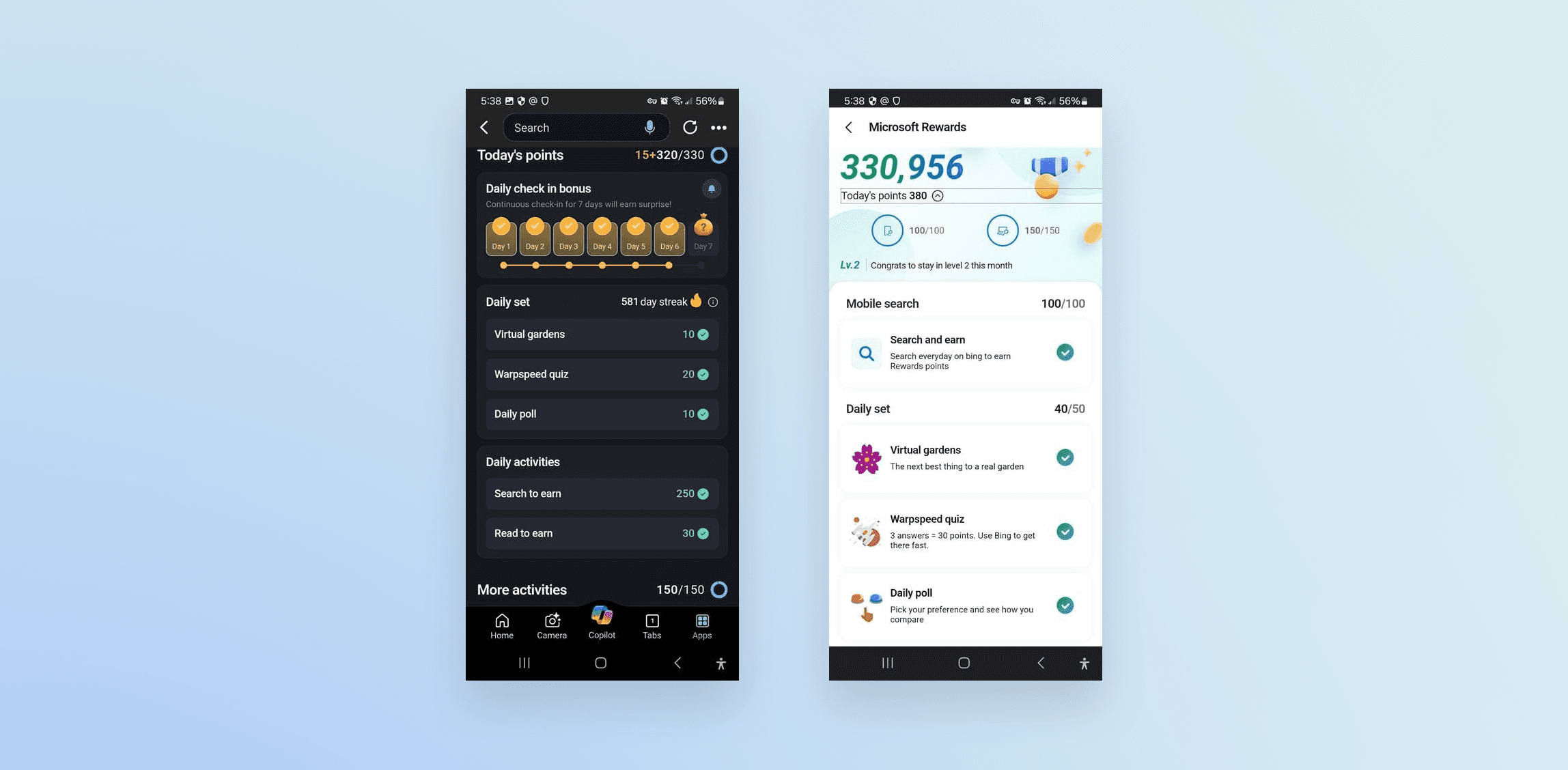
In one case, a user lost a 581-day streak due to a quiz task failing to complete, even though the system indicated all tasks were finished. This resulted in the streak resetting to zero the following day.
Because streaks represent long-term effort and progress, these failures created significant frustration and led users to seek manual restoration through customer support.
opportunity.
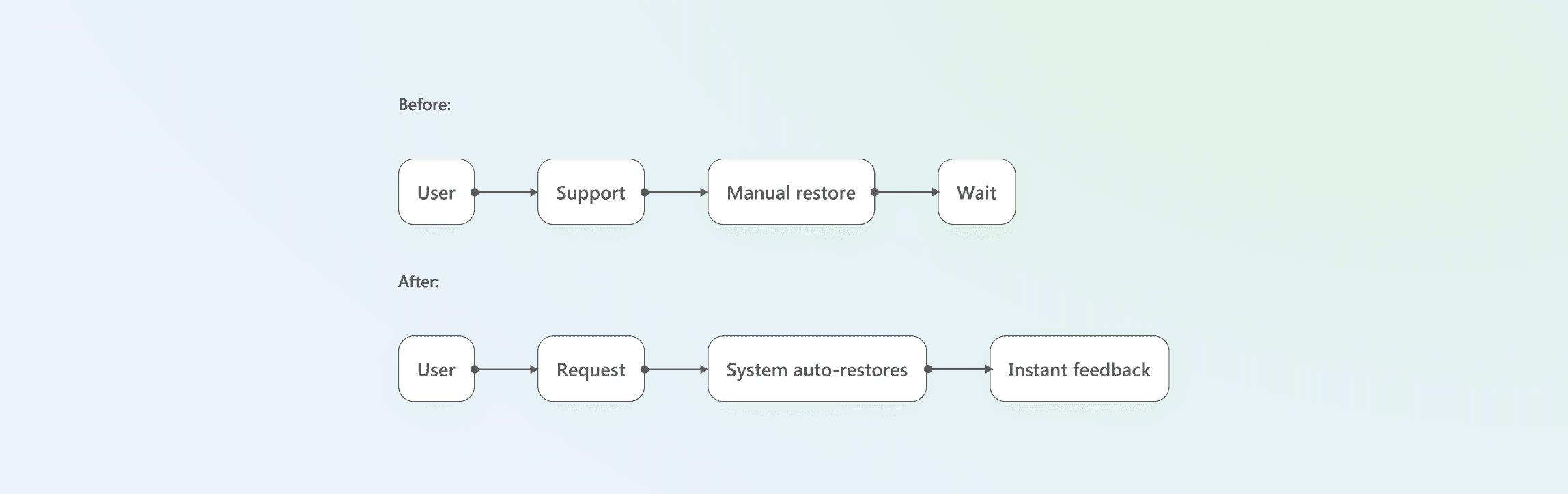
Shifting from manual support intervention to a self-service restoration flow.
design principles.
interaction design.
Several interaction directions were explored when designing the restoration flow.
Potential approaches included:
• fully automated streak forgiveness
• improved support ticket flows
• self-service restoration requests
• restoration combined with celebratory feedback
The final direction focused on a self-service restoration flow paired with engaging visual feedback to reinforce the reward moment.
Exploration of feedback patterns to reinforce streak restoration and reward recovery.
final solution.
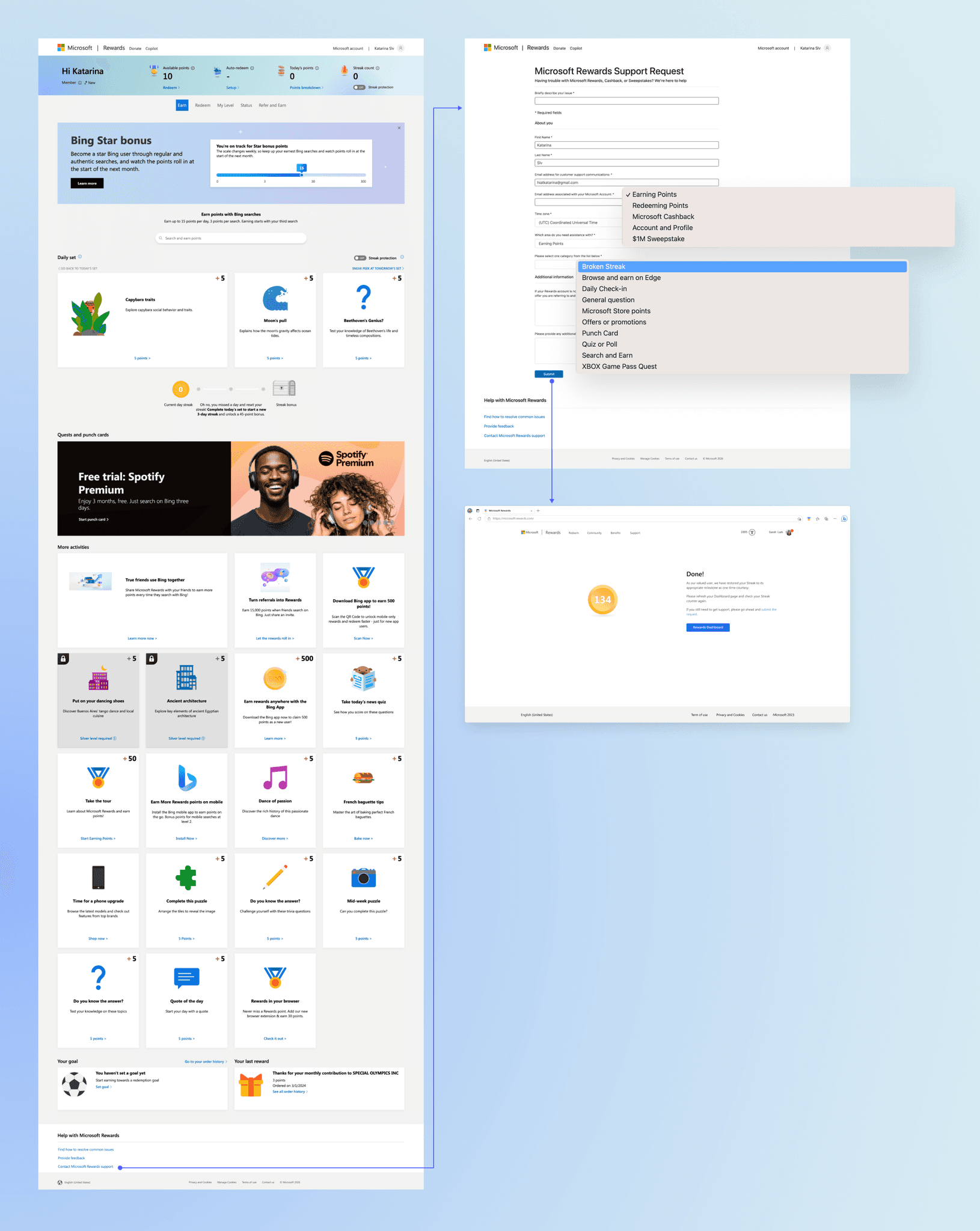
The final solution introduces a self-service streak restoration flow that allows users to recover lost progress directly within the Microsoft Rewards experience, removing the need to contact customer support.
The experience consists of three key moments:
1. Request submission
Users initiate a streak restoration request through a simple form embedded within the product.
2. System processing and confirmation
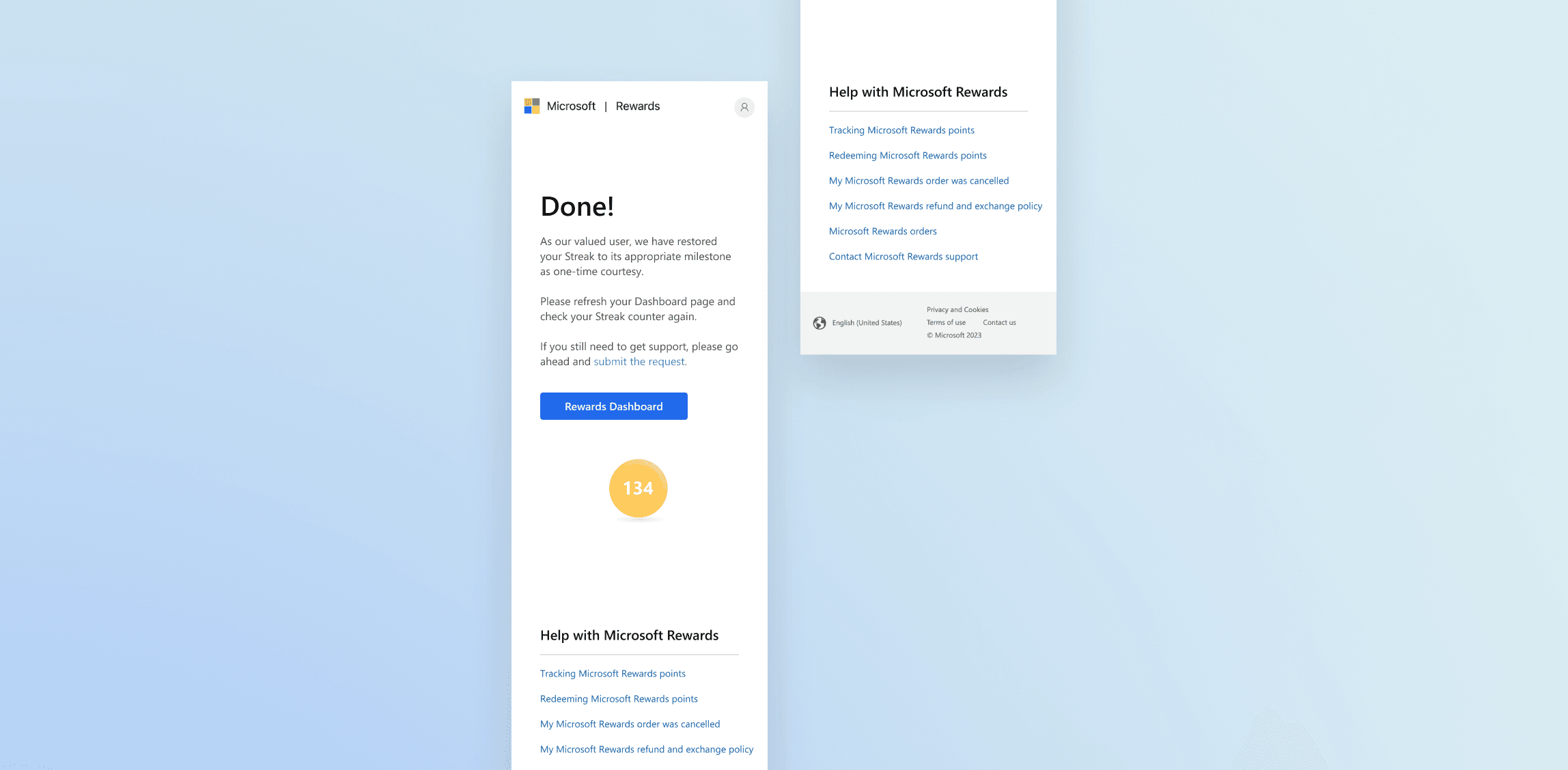
The system verifies eligibility and restores the streak automatically, providing immediate confirmation to reduce uncertainty.
3. Reinforcement through feedback
A set of custom micro-interactions communicates successful restoration and reinforces the reward moment, helping re-establish user confidence and motivation.
In parallel, a confirmation email experience ensures users receive clear follow-up communication, reinforcing trust and system transparency across touchpoints.
Together, these elements transform a previously manual support process into a scalable, product-driven experience that improves both user satisfaction and operational efficiency.
support ecosystem context.
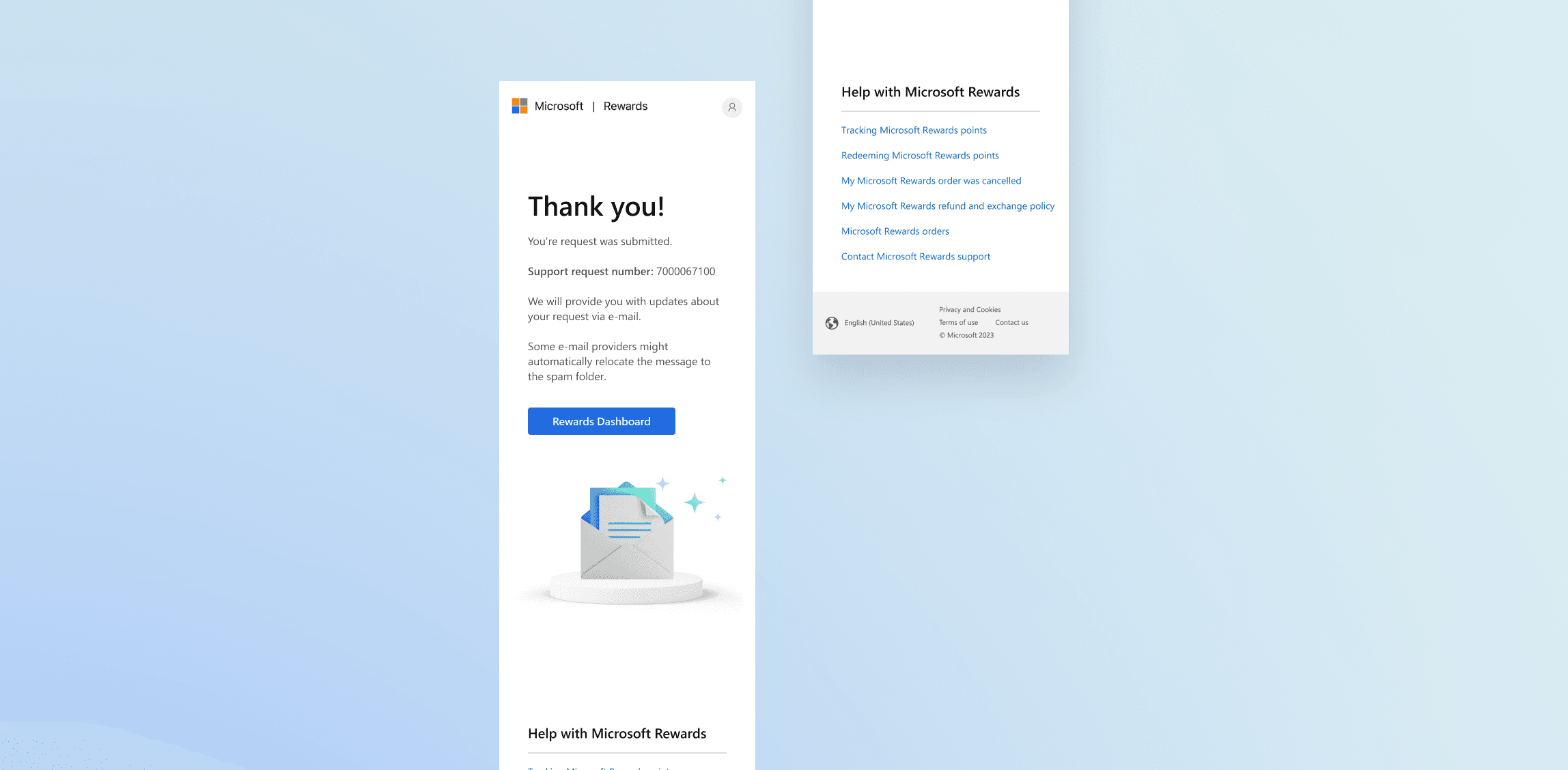
As part of the broader support experience, I also designed a confirmation flow for standard support requests outside of streak restoration.
This interaction uses a subtle envelope animation to reinforce successful submission while setting expectations that the request will be handled asynchronously by the support team.
outcome.
The solution transforms a frustrating support process into a simple product interaction.
Instead of relying on manual support requests, users can now recover their streak through a clear and immediate experience.
This approach improves the overall experience by:
• reducing reliance on customer support
• providing faster resolution for users
• reinforcing engagement with the Rewards system
• maintaining trust in streak-based rewards
future opportunities.
Future improvements could explore:
• proactive notifications when a streak is at risk
• clearer explanations of streak rules
• automated detection of eligible restoration scenarios
These enhancements could further reduce friction and strengthen the engagement loop that motivates daily participation.