Microsoft: Streak Protection

Company:

Microsoft - Loyalty Program

Year:

2024

Role:

Senior Product Designer

overview.

Microsoft Rewards is a loyalty program integrated across the Microsoft ecosystem, including Bing, Edge, Xbox and Microsoft Store. Users earn points by completing daily activities such as searches, quizzes and challenges.

A core engagement mechanic in the system is the daily streak, which encourages users to return consistently over time.

While this mechanic successfully drives engagement, it also introduces friction. When users accidentally miss a day, their streak resets, often leading to frustration and disengagement.

This project focused on preserving the motivational power of streaks while reducing the negative impact of accidental streak loss.

I led the design of Streak Pause, a feature that protects user progress while preserving the integrity of the rewards system.
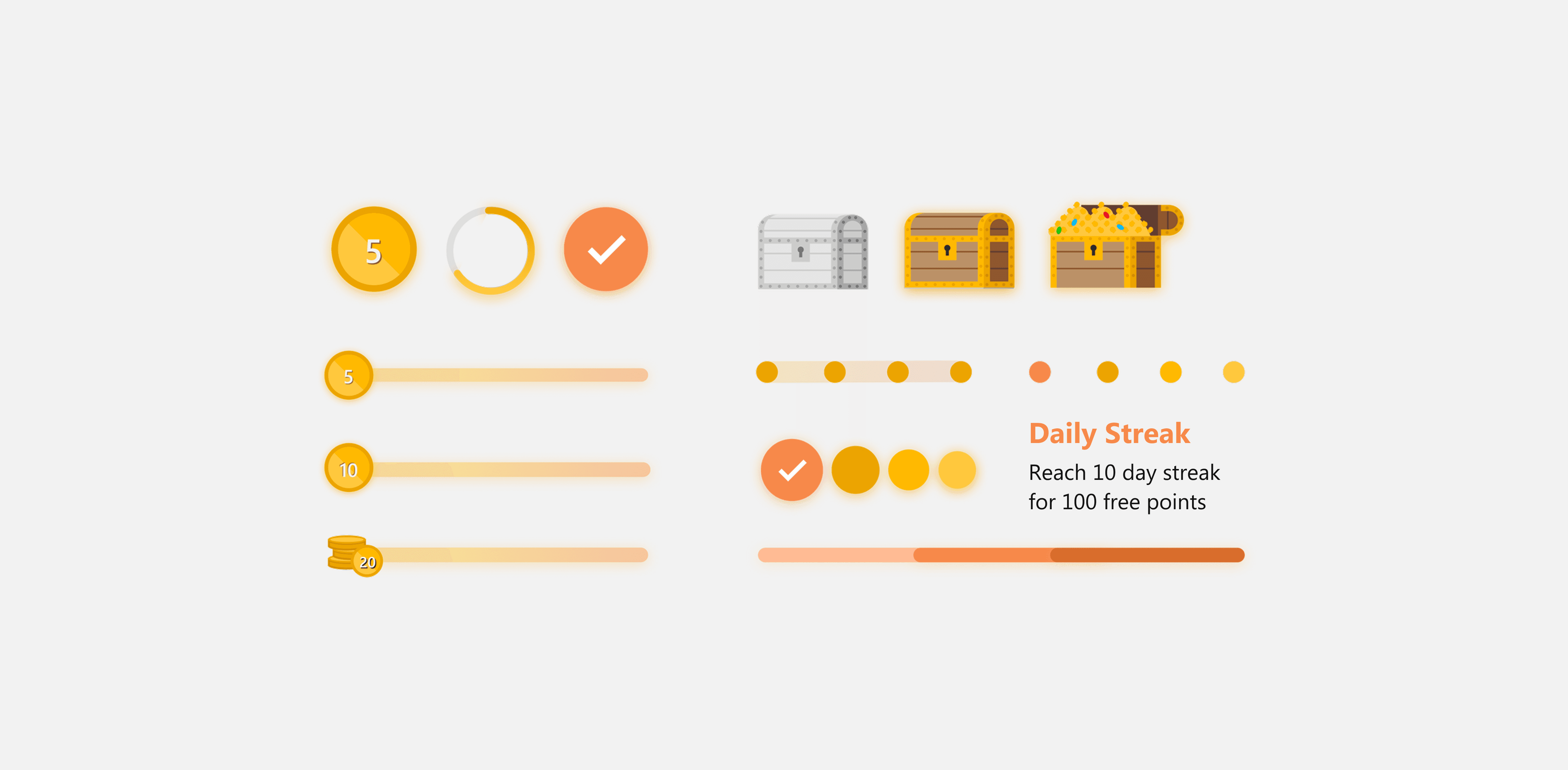
UI components used to represent streak progress, reward milestones, and achievement states within the Microsoft Rewards system.

UI components used to represent streak progress, reward milestones, and achievement states within the Microsoft Rewards system.

problem.

Although streaks are effective at driving daily engagement, they can also create negative moments when progress is unexpectedly lost.

Users who accidentally miss a day, for example due to travel or other circumstances outside their control, lose their accumulated streak progress. For highly engaged users, this loss can feel discouraging and may reduce motivation to continue participating.

The design challenge was to introduce flexibility without weakening the incentive structure that makes streaks effective.
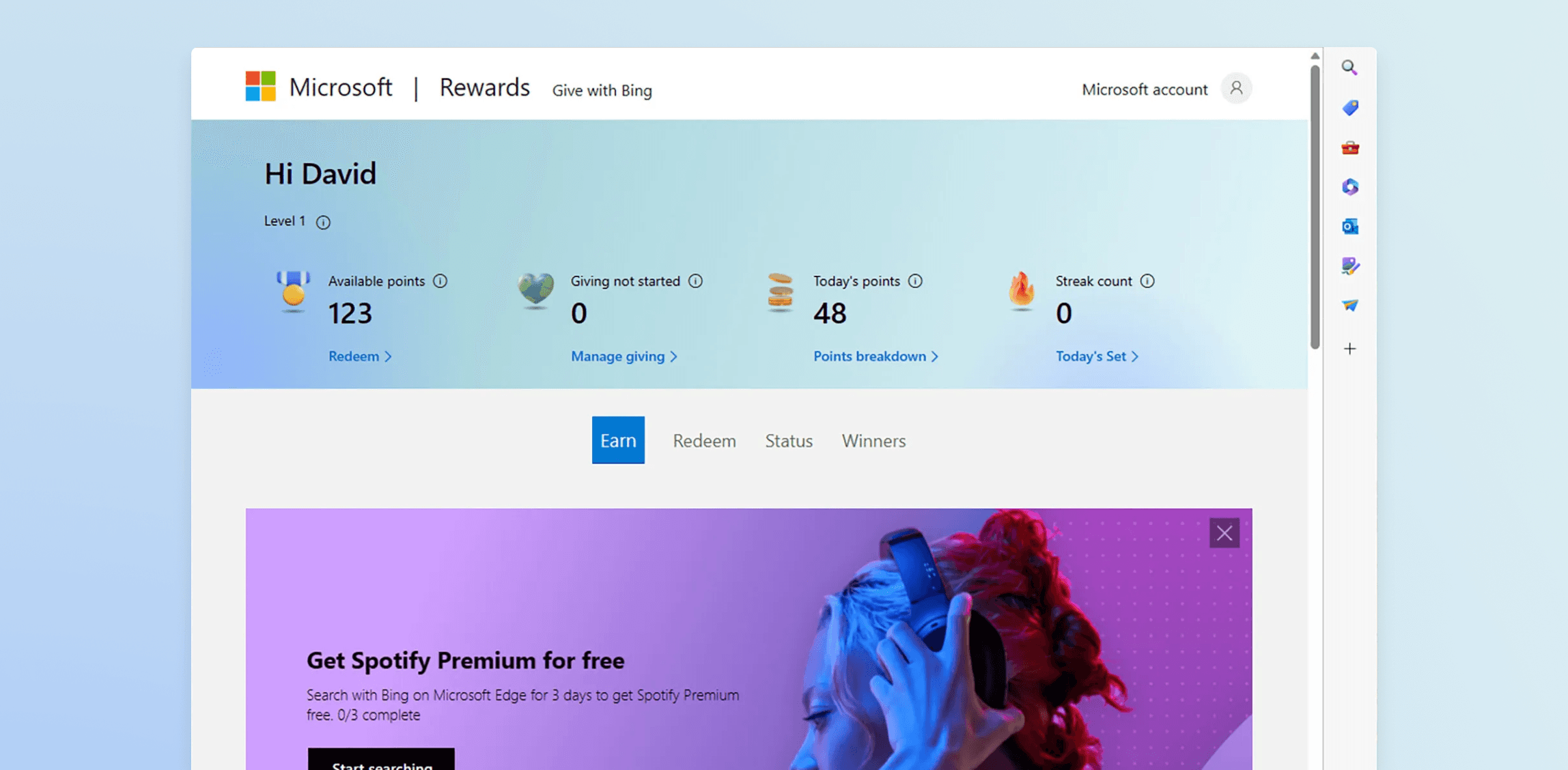
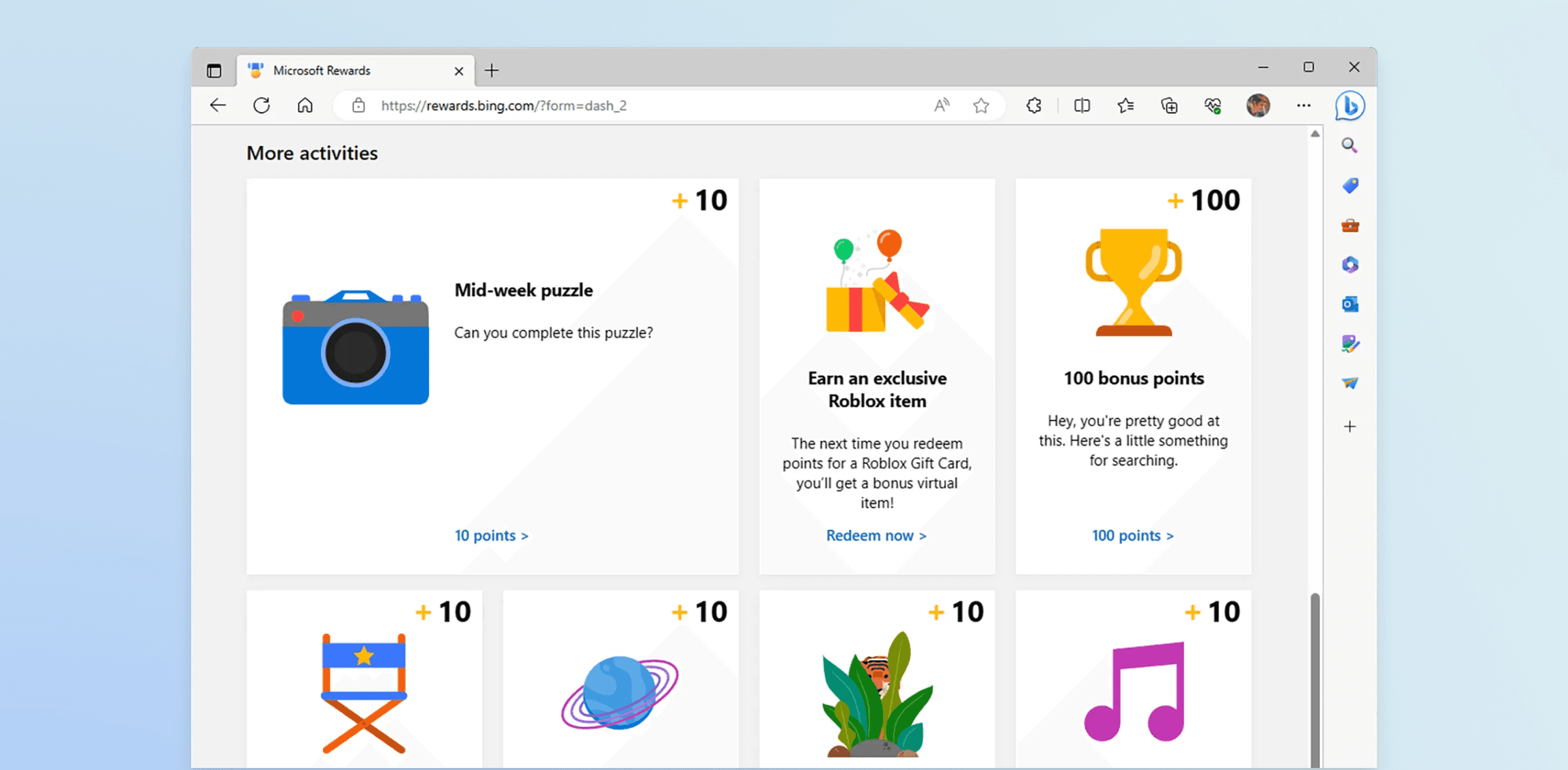
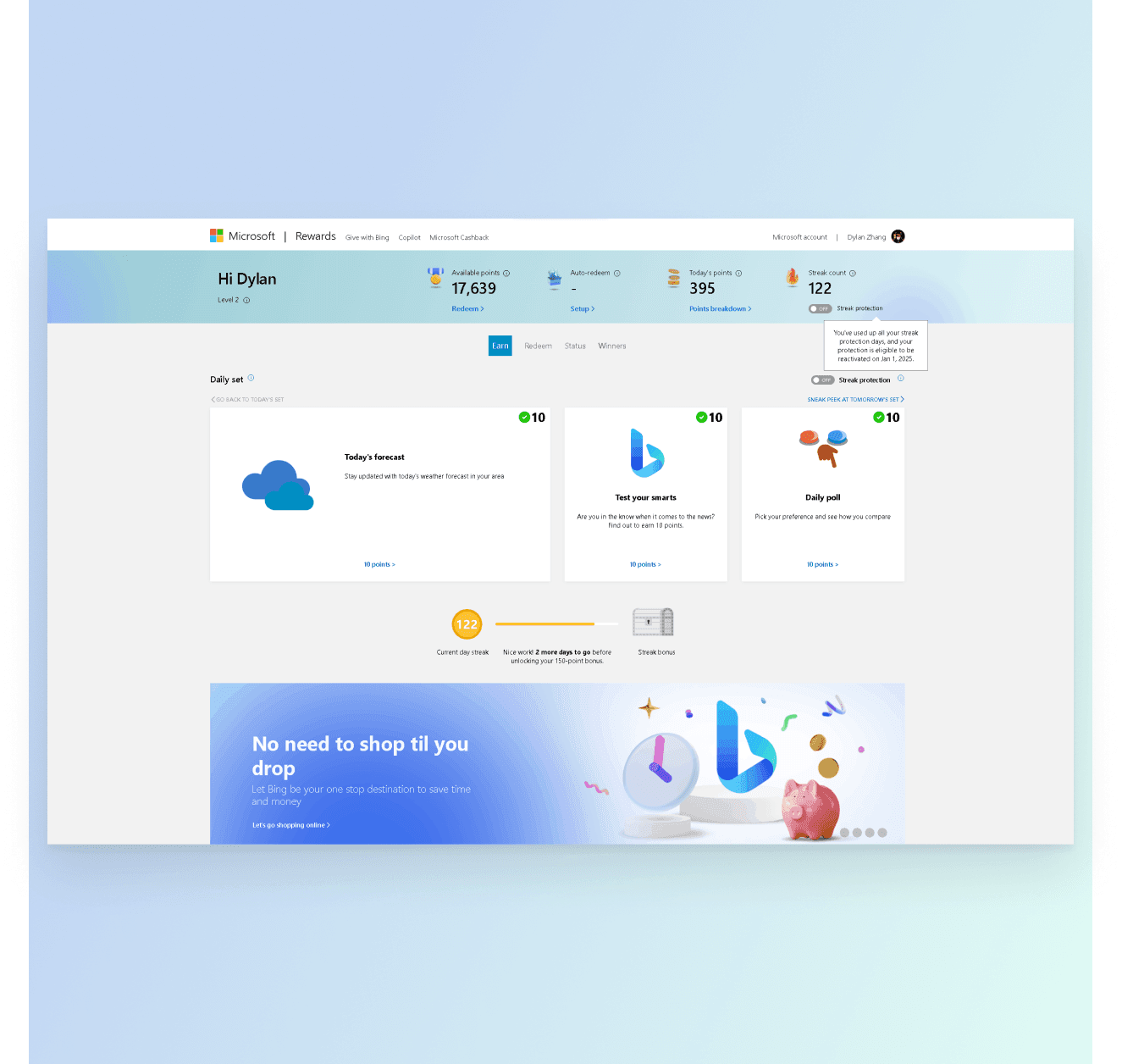
Microsoft Rewards dashboard where users track points, daily activities, and streak progress.

Microsoft Rewards dashboard where users track points, daily activities, and streak progress.

constraints.

The reward system operates as a behavioral loop designed to increase daily engagement. If streak protection became too easy, the mechanic would lose its motivational value.

At the same time, the system needed to account for realistic situations such as travel, illness, or simple forgetfulness.

The solution had to preserve fairness across millions of users while preventing abuse.

research.
I began by reviewing literature on gamification and reward systems to better understand how streak-based mechanics influence user motivation and engagement.

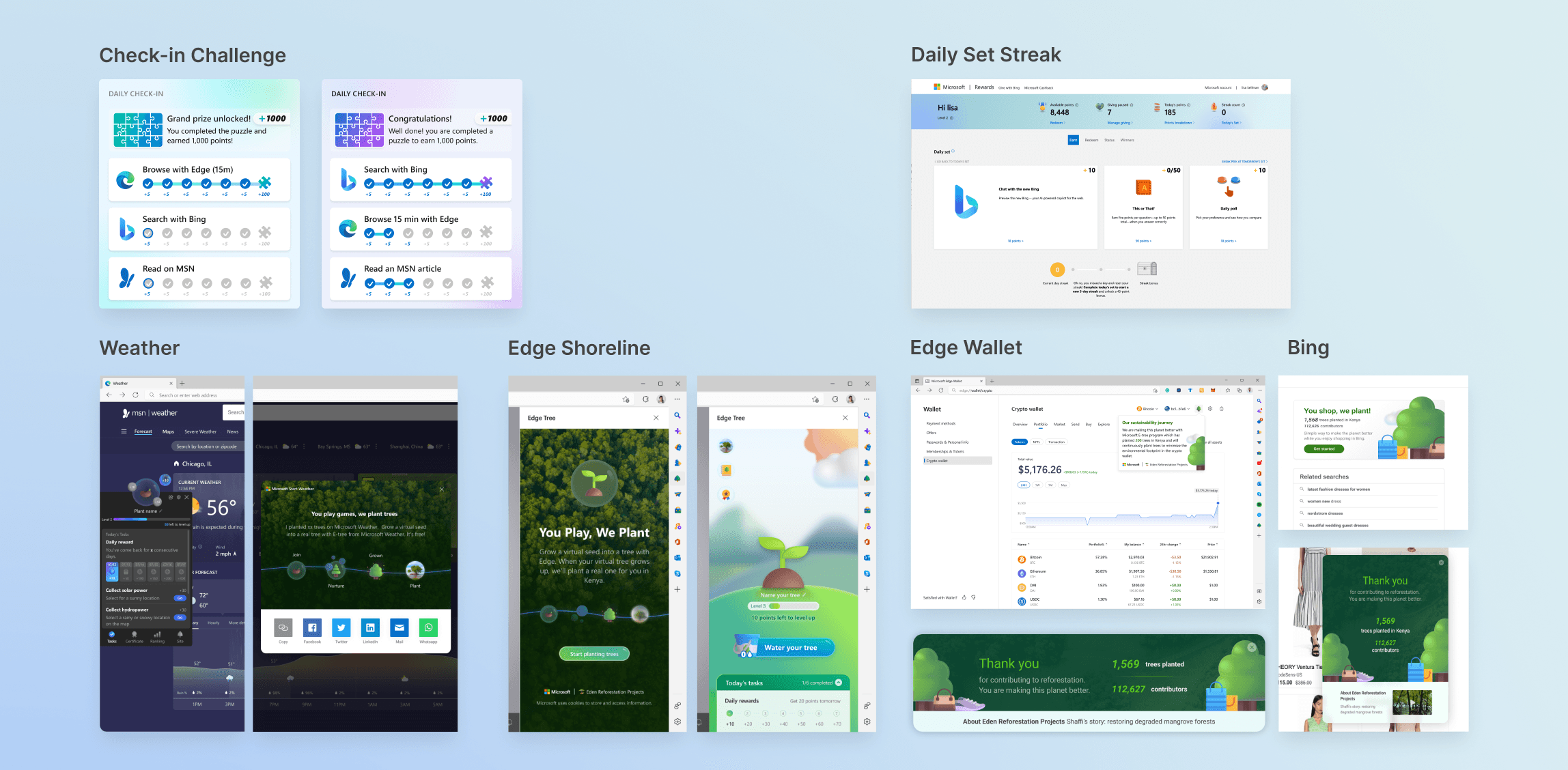
I then looked at Microsoft Rewards ecosystem across multiple surfaces, where users complete daily activities, earn points, and maintain streak progress as part of the engagement system.

To understand how similar systems handle streak interruptions, I conducted a comparative review of products that rely on habit building mechanics.

I began by reviewing literature on gamification and reward systems to better understand how streak-based mechanics influence user motivation and engagement.

I then looked at Microsoft Rewards ecosystem across multiple surfaces, where users complete daily activities, earn points, and maintain streak progress as part of the engagement system.

To understand how similar systems handle streak interruptions, I conducted a comparative review of products that rely on habit building mechanics.

Microsoft Rewards experiences across Bing, Edge, and partner surfaces where users complete daily activities, earn points, and maintain streak progress.
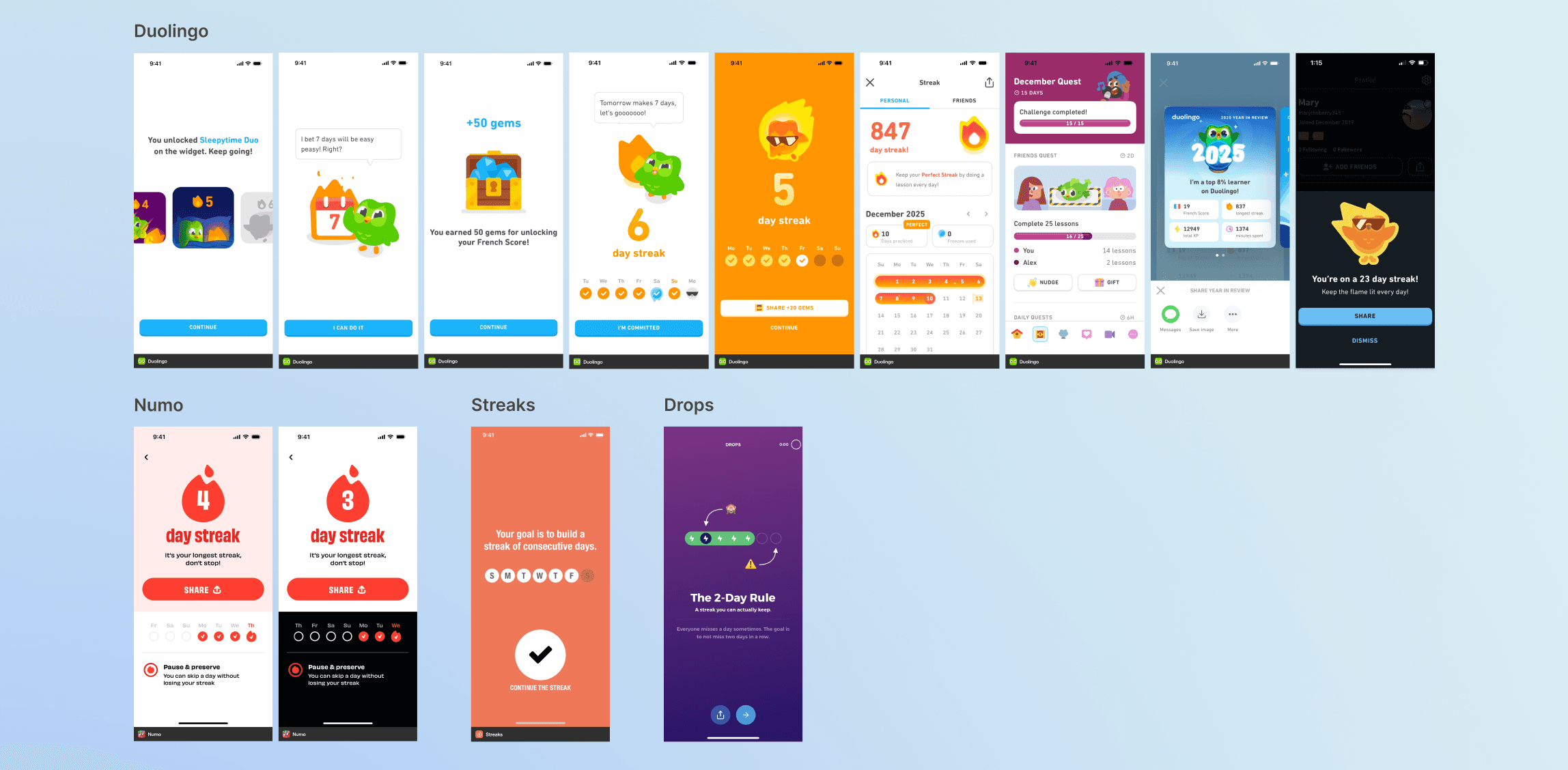
Examples of streak mechanics used in other products to reinforce habit formation and daily engagement.

Platforms such as Duolingo, Drops, Numo, Headspace, Fitbit, Habitica, and MyFitnessPal use different approaches to protect streak progress.

Some allow users to pay to restore a streak. Others provide scheduled breaks or automatic protection mechanisms.

  • Duolingo: allows users to pay to restart streak

  • Drops: allows users to skip 2 days

  • Habitica: flexible in maintaining streaks through different mechanisms.

  • Headspace: allows users to contact support to maintain streaks if they miss a day.

  • Fitbit: allows users to ,anually adjust entries to maintain streaks.

  • Forest: 'Streak Freeze' feature to maintain focus streaks

  • MyFitnessPal: allows streak pauses for logging breaks.

This analysis helped identify the design space for potential solutions.

Platforms such as Duolingo, Drops, Numo, Headspace, Fitbit, Habitica, and MyFitnessPal use different approaches to protect streak progress.

Some allow users to pay to restore a streak. Others provide scheduled breaks or automatic protection mechanisms.

  • Duolingo: allows users to pay to restart streak

  • Drops: allows users to skip 2 days

  • Habitica: flexible in maintaining streaks through different mechanisms.

  • Headspace: allows users to contact support to maintain streaks if they miss a day.

  • Fitbit: allows users to ,anually adjust entries to maintain streaks.

  • Forest: 'Streak Freeze' feature to maintain focus streaks

  • MyFitnessPal: allows streak pauses for logging breaks.

This analysis helped identify the design space for potential solutions.

user perspectives.

Microsoft Rewards users represent a diverse group, but several patterns emerged.

Some users interact with the system casually through daily searches. Others are highly motivated participants who actively track streak progress.

For engaged users, streak loss often creates a strong sense of frustration because it erases visible progress accumulated over time.

This insight reinforced the importance of protecting streak continuity while maintaining a sense of fairness.

Key Microsoft Rewards users are included below, each group engages differently with streak mechanics.
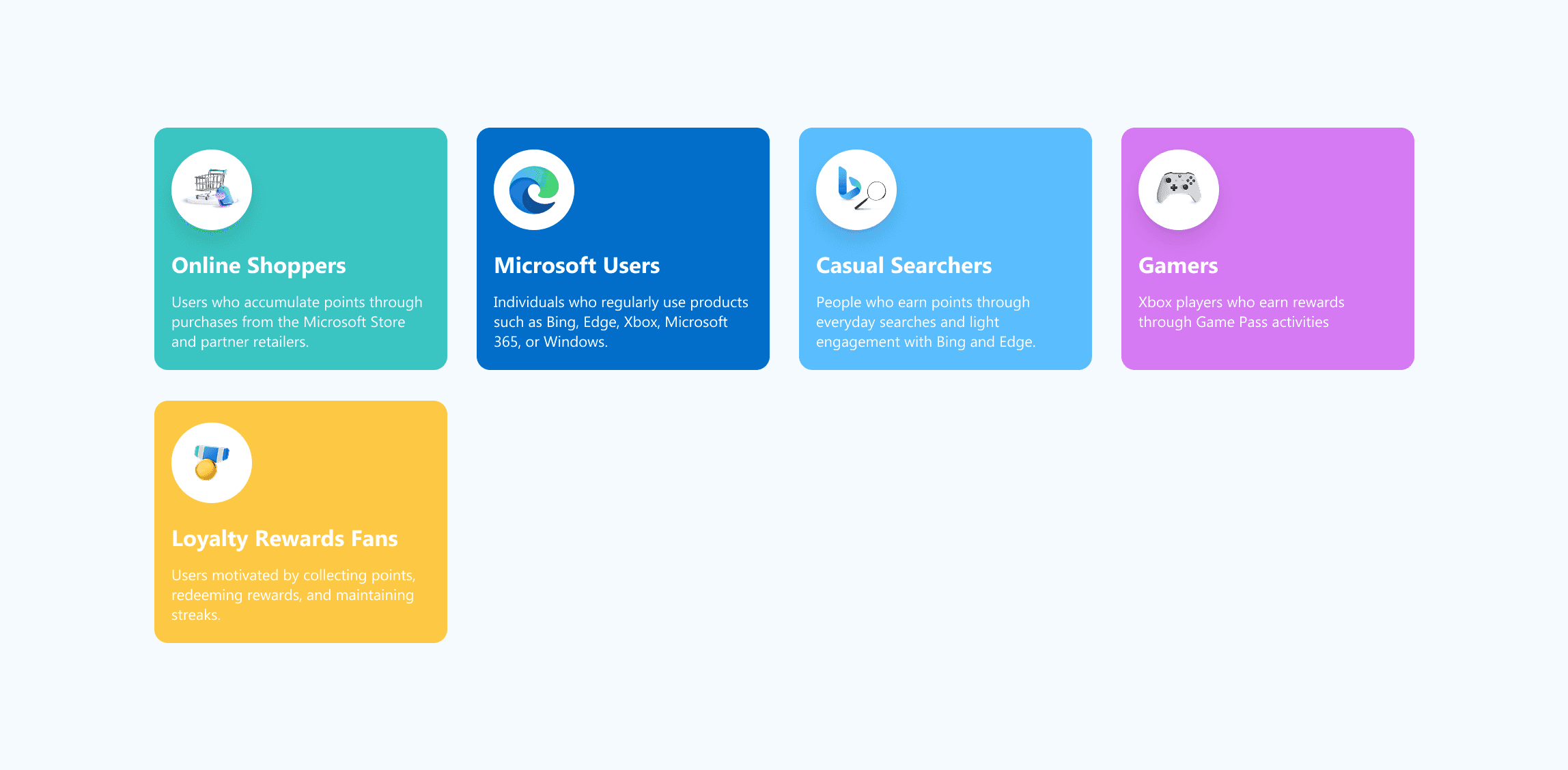
Key Microsoft users include: Online Shoppers, Microsoft Ecosystem Users, Casual Searchers, Gamers, Loyalty Program Participants

user journey.
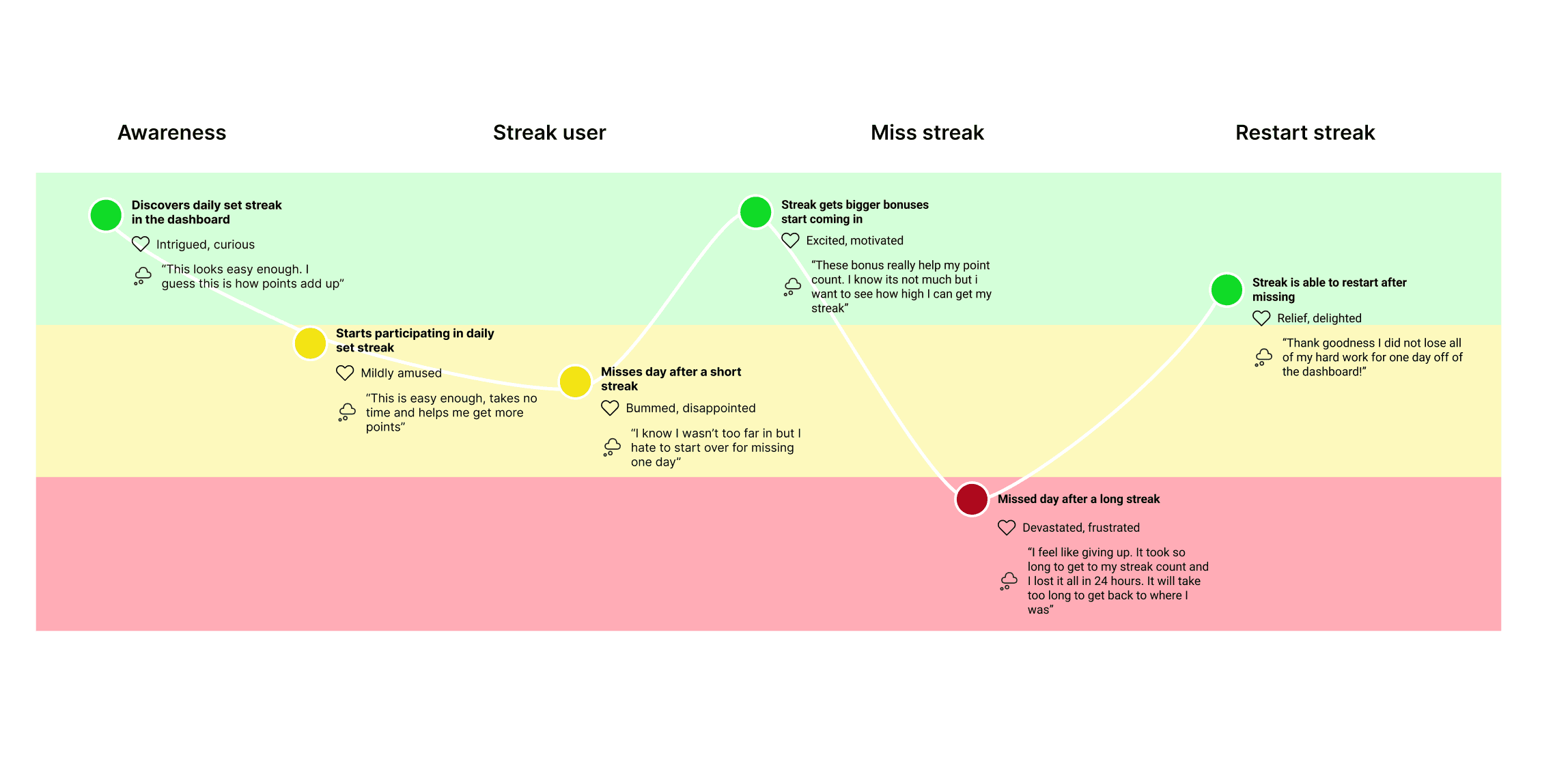
Mapping the streak experience revealed a critical emotional moment in the user journey.

The experience typically follows four stages:

Discovery of streaks
Users become aware of the streak feature through the dashboard and begin participating in daily activities.

Commitment to maintaining progress
As streaks grow, users become increasingly motivated to maintain consistency and continue returning each day.

Accidental interruption
Missing a single day breaks the streak, often due to circumstances outside the user’s control.

Frustration and disengagement
For highly engaged users, losing a streak after sustained progress creates a strong negative emotional reaction and can reduce motivation to continue participating.

This analysis highlighted the most fragile moment in the journey: the point at which a streak is unexpectedly lost. Design opportunities focused on reducing the negative impact of this moment while preserving the motivational structure of the streak system.

Mapping the streak experience revealed a critical emotional moment in the user journey.

The experience typically follows four stages:

Discovery of streaks
Users become aware of the streak feature through the dashboard and begin participating in daily activities.

Commitment to maintaining progress
As streaks grow, users become increasingly motivated to maintain consistency and continue returning each day.

Accidental interruption
Missing a single day breaks the streak, often due to circumstances outside the user’s control.

Frustration and disengagement
For highly engaged users, losing a streak after sustained progress creates a strong negative emotional reaction and can reduce motivation to continue participating.

This analysis highlighted the most fragile moment in the journey: the point at which a streak is unexpectedly lost. Design opportunities focused on reducing the negative impact of this moment while preserving the motivational structure of the streak system.

Emotional pattern

The emotional journey revealed a sharp drop in motivation when streak progress is lost.

Excitement → Commitment → Missed streak → Frustration → Disengagement

Emotional pattern

The emotional journey revealed a sharp drop in motivation when streak progress is lost.

Excitement → Commitment → Missed streak → Frustration → Disengagement

This pattern reinforced the importance of protecting streak continuity without removing the incentive structure that motivates daily participation.

Mapping the streak experience revealed a critical emotional moment in the user journey.

The experience typically follows four stages:

Discovery of streaks
Users become aware of the streak feature through the dashboard and begin participating in daily activities.

Commitment to maintaining progress
As streaks grow, users become increasingly motivated to maintain consistency and continue returning each day.

Accidental interruption
Missing a single day breaks the streak, often due to circumstances outside the user’s control.

Frustration and disengagement
For highly engaged users, losing a streak after sustained progress creates a strong negative emotional reaction and can reduce motivation to continue participating.

This analysis highlighted the most fragile moment in the journey: the point at which a streak is unexpectedly lost. Design opportunities focused on reducing the negative impact of this moment while preserving the motivational structure of the streak system.

Emotional pattern

The emotional journey revealed a sharp drop in motivation when streak progress is lost.

Excitement → Commitment → Missed streak → Frustration → Disengagement

design opportunity.

The journey analysis revealed that the most critical breakdown occurs when a streak is unexpectedly lost after sustained engagement. This moment introduces a sharp drop in motivation and can disrupt the habit loop that drives daily participation.

The design opportunity therefore focused on protecting streak continuity during unexpected interruptions while preserving the incentive structure that motivates users to return each day.

This insight guided the exploration of solutions that could introduce controlled flexibility without weakening the rewards system.

design exploration.

After identifying the moment where streak loss causes the greatest drop in motivation, we explored several approaches that could introduce flexibility while maintaining the engagement loop that streaks create.

One concept explored allowing users to restore a streak by spending reward points. This approach provided flexibility but risked creating a perception that progress could simply be purchased.

Another direction introduced scheduled breaks that users could activate in advance. While this preserved fairness in the system, it required users to anticipate interruptions ahead of time.

We also explored automatically protecting streaks when a day was missed. Although this removed friction, it significantly weakened the incentive to maintain daily participation.

Evaluating these tradeoffs helped identify the need for a solution that balanced user control, fairness, and engagement incentives.

This exploration ultimately led to the concept of a manual Streak Protection feature.

interaction design.

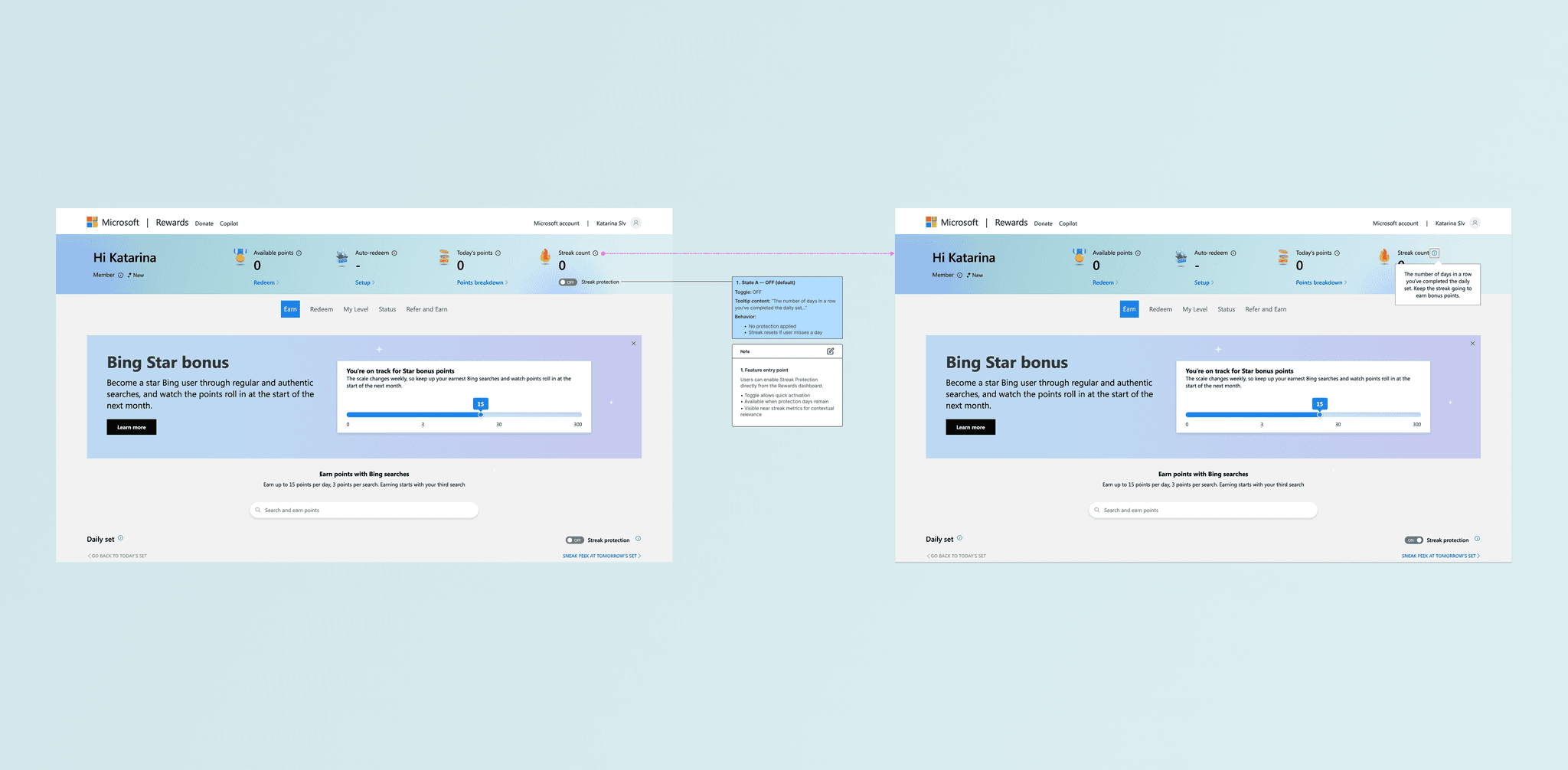
The interface integrates the pause option directly into the streak management area of the dashboard.

Clear feedback communicates when a streak is active, paused, or resumed. Motion and visual cues reinforce these transitions.

These details help reduce uncertainty and maintain trust in the system.

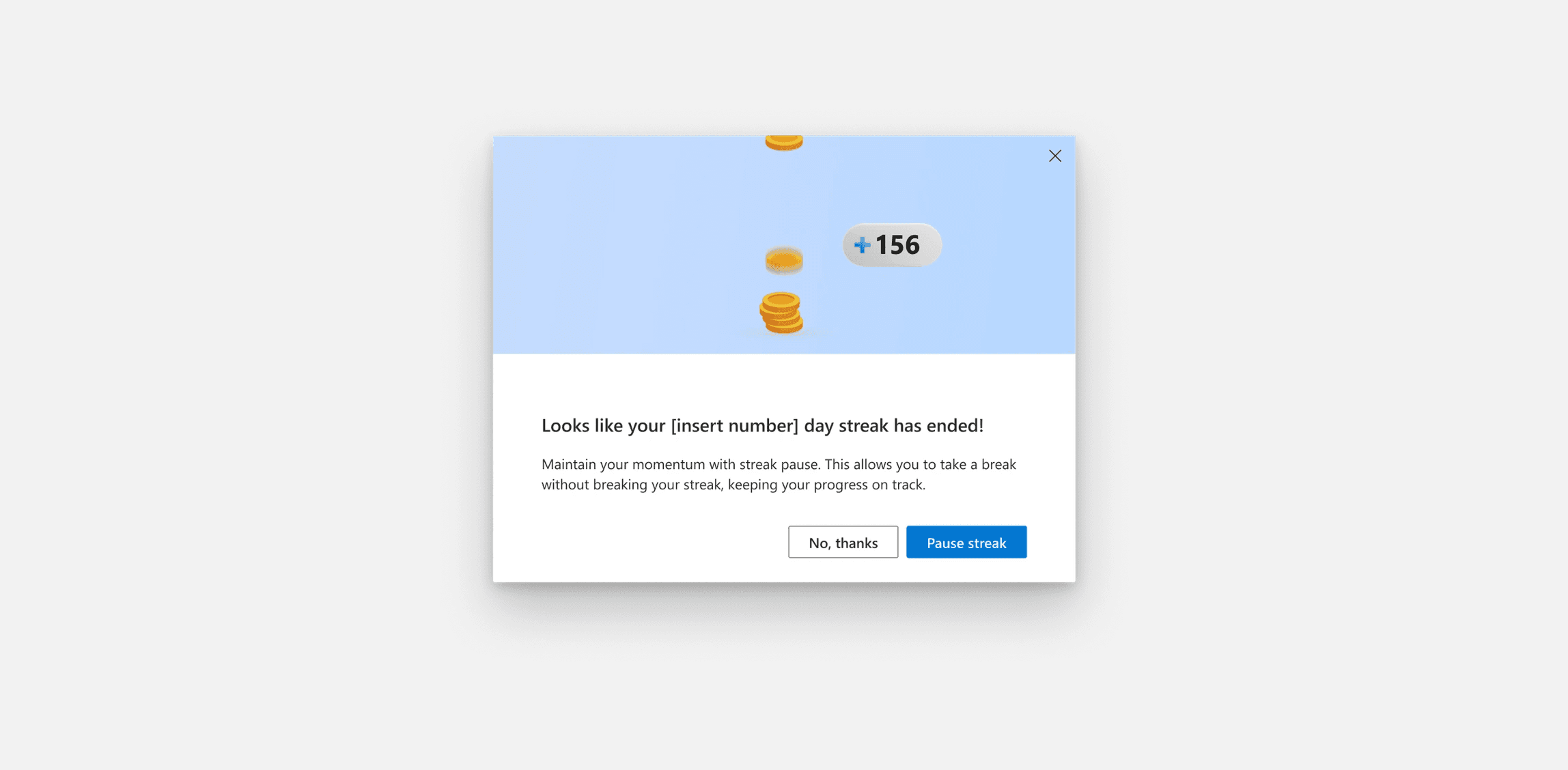
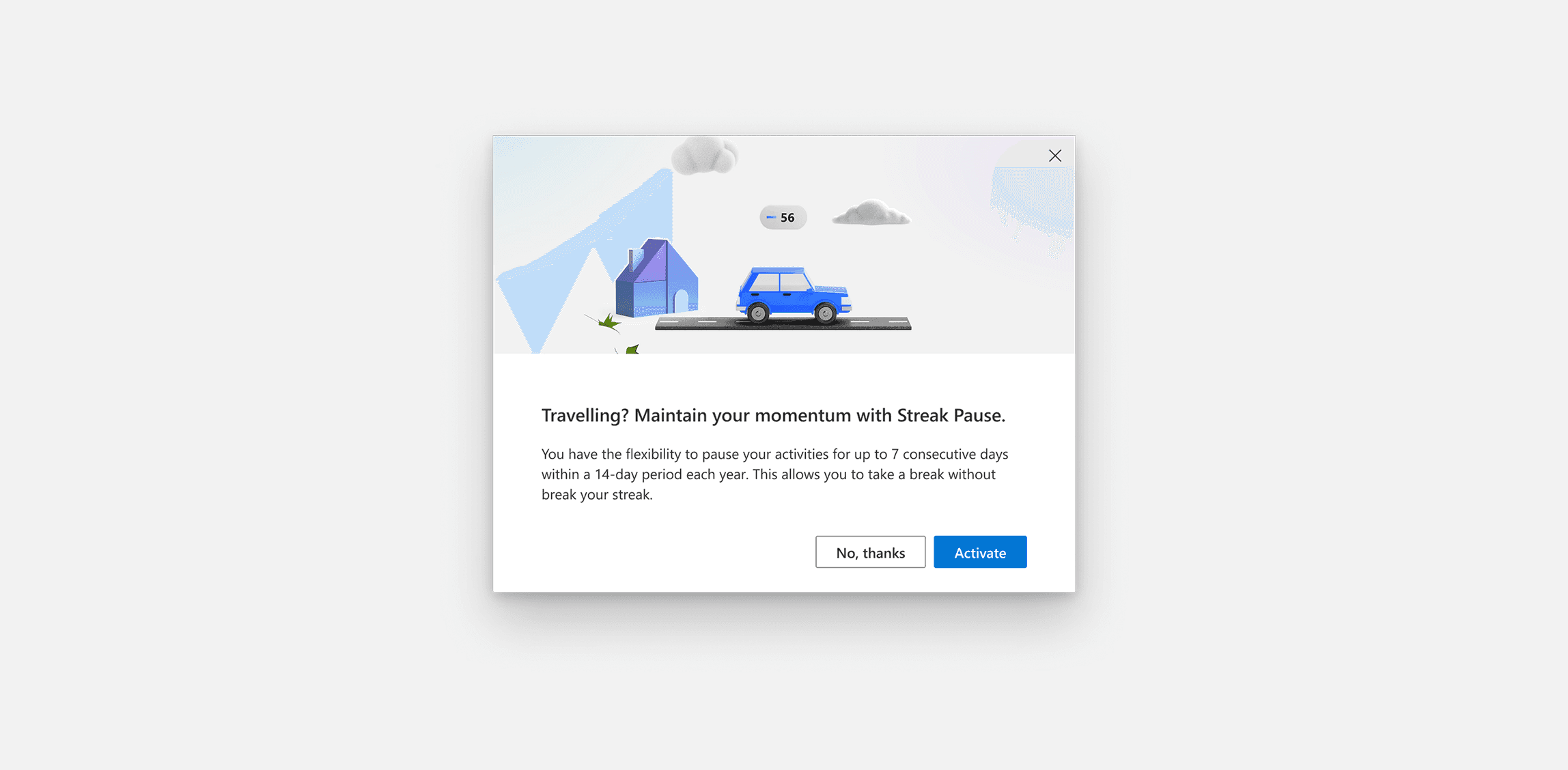
Because streak interruptions occur in different situations, we explored several modal dialog scenarios to clearly communicate when a streak could be paused and how the system responds.

These interaction animations illustrate how the feature behaves across different contexts and how users receive feedback when their streak progress is protected.
final solution.

The chosen approach introduced a manual Streak Protection feature.

Users can temporarily pause their streak when they anticipate missing a day. Visual feedback and motion cues reinforce the change in system state, helping users maintain confidence in the system.This preserves their progress while maintaining transparency and control.

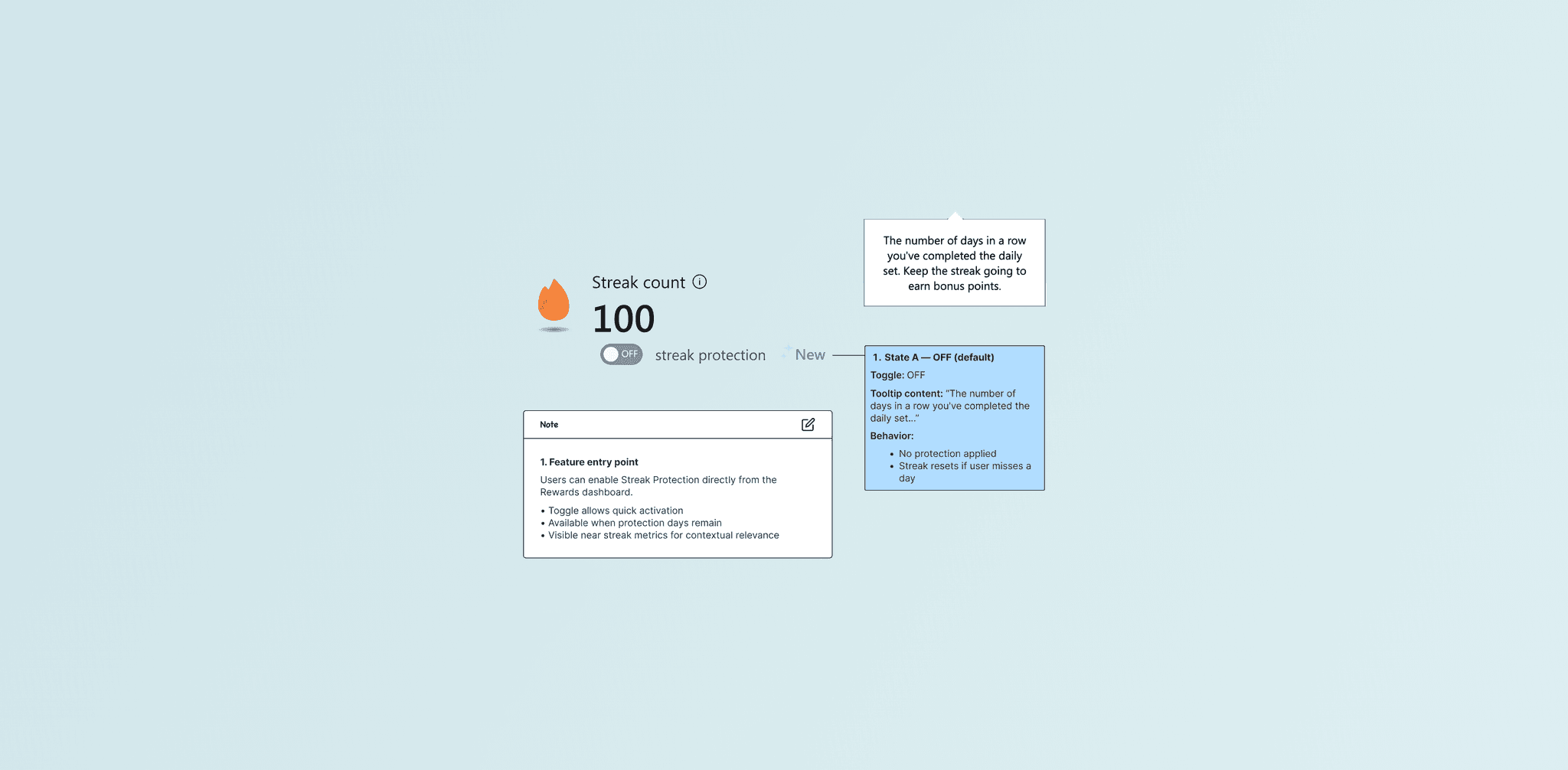
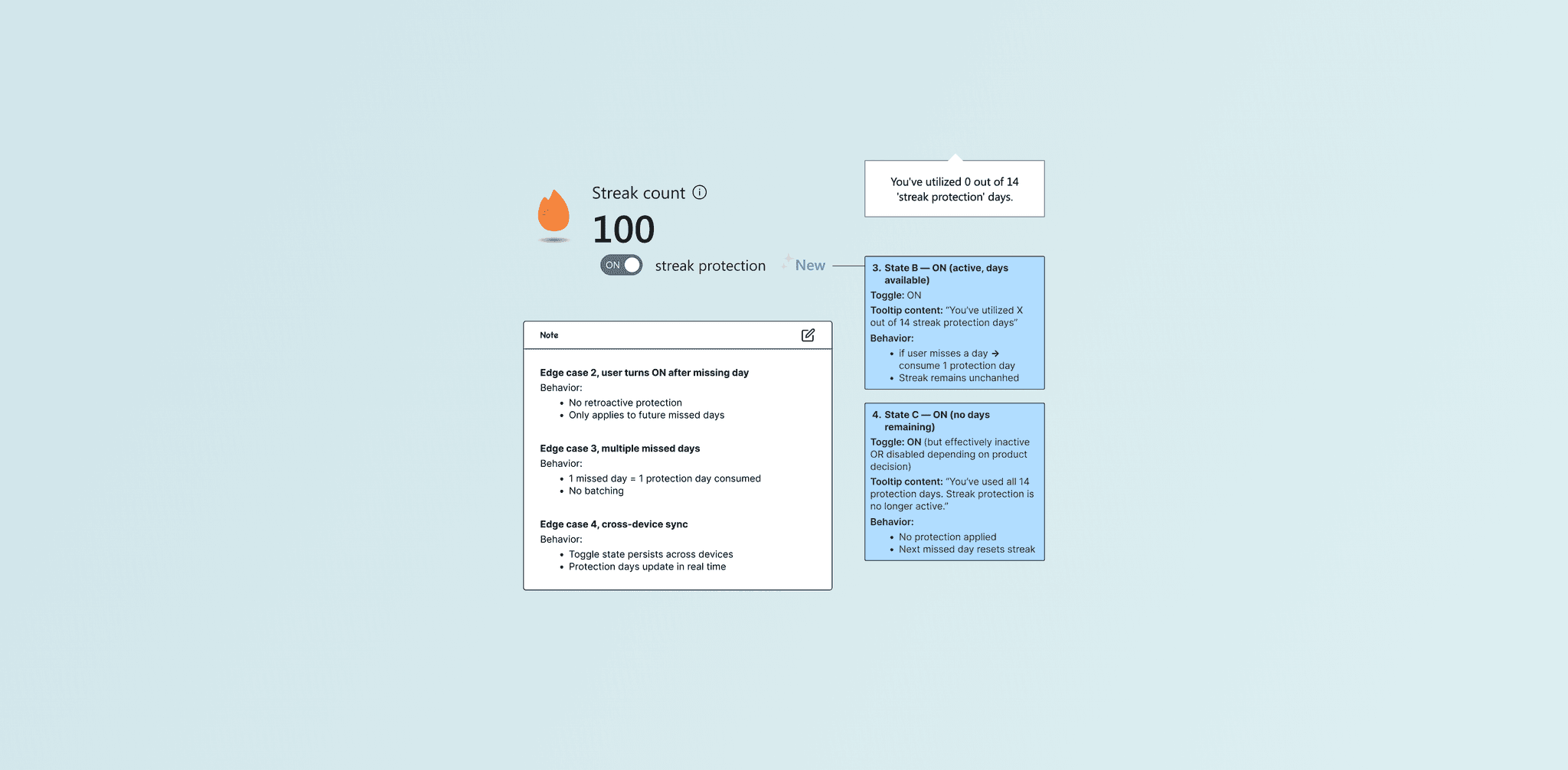
The initial designs introduced Streak Protection through a modal when users enabled the toggle. To reduce interruption and simplify the experience, the modal was removed and replaced with contextual tooltips that communicate the feature state dynamically.

State feedback

OFF → Tooltip explains streak system
ON → Tooltip shows protection usage
outcome.

The feature protects user progress while maintaining the motivational structure of the reward system.

By introducing controlled flexibility, the design supports long term engagement without weakening the value of streak mechanics.

Future iterations could explore personalized streak protection and improved behavioral insights.